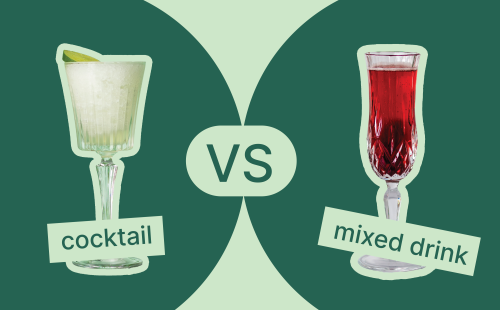

“While all cocktails are mixed drinks, not all mixed drinks are cocktails.” This statement often raises the question: what’s the difference between a cocktail and a mixed drink?
It’s a debate that frequently sparks endless discussions with many perspectives but little agreement. This article aims to clarify the distinctions between the two.
How do mixed drinks and cocktails differ?
A cocktail requires at least three ingredients, while a mixed drink needs only two.
While every cocktail is a mixed drink with a specific blend of ingredients, not every mixed drink—such as a simple combination of one spirit and one mixer—has the complexity to be considered a cocktail.
But it’s not just about complexity. We differentiate between these two based on several other factors:
- Recipe: Cocktails follow defined recipes that balance their components harmoniously (e.g., Manhattan), while the composition of mixed drinks can vary widely and are rather based on proportions (e.g., Whiskey & Coke).
- Linguistic Usage: The term ‘cocktail’ is associated with sophistication and formality; in contrast, ‘mixed drink’ is used more informally.
- Drink Size: Typically, cocktails are short alcoholic beverages not exceeding 150-180 ml (e.g., Old Fashioned), whereas mixed drinks often come in larger servings (e.g., Vodka Soda).
- Preparation Method: Cocktails require careful blending, such as stirring or shaking without ice in the final serving (e.g., Martini). Preparing mixed drinks involves less intensive effort and it usually requires only pouring ingredients directly into the service glass.

What Is A Cocktail?
A cocktail is a type of mixed drink typically made with at least three ingredients. The ingredients can include spirits, liqueurs, fruit juices, bitters, soda water, cream, bitters… And many more. Cocktails often feature garnishes such as citrus slices, cherries, or olives.
Origin
The term “cocktail” originates from the 19th century, but its precise etymology is unclear. One popular theory suggests that it comes from the French word Coquetier, which means “egg cup”, due to the resemblance between the egg cup and the glasses these cocktails were originally served in.
Cocktails gained popularity in America during Prohibition when they were used to mask the taste of poorly made alcohol. They became an integral part of American culture after World War II due to their association with glamour and sophistication.
The original cocktail recipe, as defined in the May 13, 1806 edition of The Balance and Columbian Repository, a Hudson, New York newspaper, was: “a stimulating liquor composed of spirits of any kind – sugar, water, and bitters.” This is essentially the recipe for an Old Fashioned! At that time, ordering a cocktail was pretty simple: want something gin-based? Just to ask for a “gin cocktail”, and the bartender will serve you a glass of gin mixed with sugar and a bit of bitters. Rather in the mood for rum? Well, same method: by asking for a “rum cocktail”, what you would get would be essentially a rum Old Fashioned.
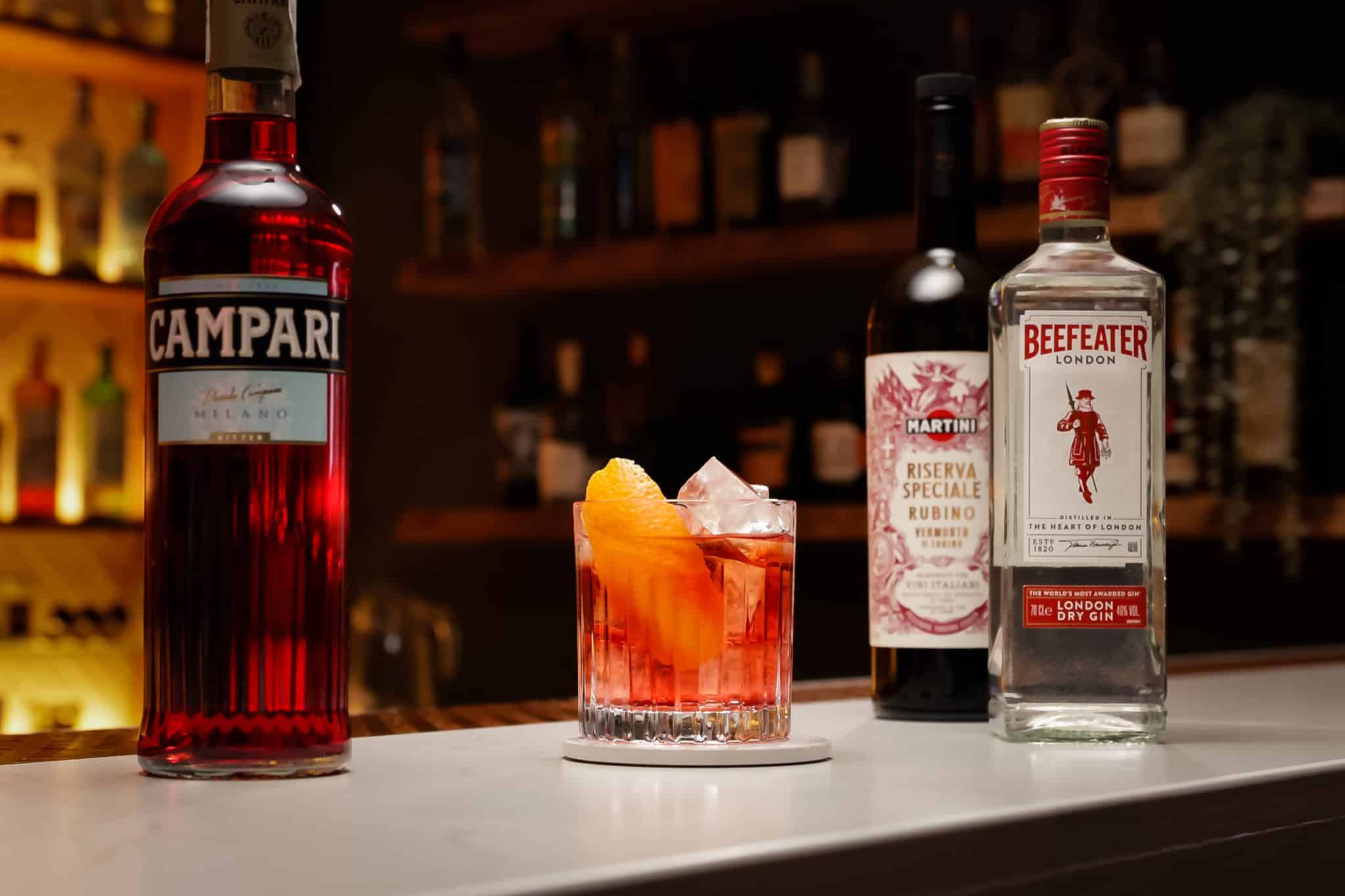
Other historically significant cocktails – which, however, came way later – include the Manhattan (whiskey, sweet vermouth, and bitters), Negroni (gin, Campari, and sweet vermouth), and Martini (gin or vodka stirred with dry vermouth). Over time, bartenders have developed countless variations on these traditional recipes, leading to the modern cocktails we know today.
Learn more about Why a Cocktail Is Called a Cocktail + Why is an Old Fashioned Called an Old Fashioned
Alcohol
Cocktails traditionally contain one or more types of liquor along with other ingredients. However, there are also non-alcoholic variants known as mocktails that mimic the flavor and complexity of a cocktail without the alcohol. Additionally, “no and low” cocktails refer to drinks with reduced alcohol content, while “skinny” versions and low-calorie cocktails use lower-calorie mixers for those mindful of their caloric intake.
Learn more about Cocktail vs Mocktail.
There are 7 main cocktail families: Sours, Highballs, Old Fashioneds, Martinis, Daisies (such as the Sidecar or the White Lady), Flips & Nogs, and Tiki Drinks.
What is A Mixed Drink?
A mixed drink is a beverage in which a spirit is mixed with a mixer such as soda or fruit juice. Hence a mixed drink is often referred to as a ‘one and,’ such as Rum and Coke, Gin and Tonic, Jack and Coke.
Names
Mixed drinks often carry unique names that have their own story or history. Various factors inspired these names, such as the drink’s appearance, ingredients, or even historical events and figures.
The Screwdriver is a mixed drink of vodka and orange juice, often garnished with an orange slice. The name “Screwdriver” reportedly comes from American oil workers in the Middle East who secretly added vodka to their orange juice and stirred the mixture with their screwdrivers.
The Cuba Libre consists of rum and cola, usually garnished with a lime wedge. The name “Cuba Libre,” which translates to “Free Cuba,” originates from the end of the Spanish-American War when American soldiers would toast to a free Cuba after mixing Coca-Cola and Cuban rum.

Long Drinks
While all long drinks fall under the category of mixed drinks, not every mixed drink is a long drink.
“Long drink” specifically refers to a type of mixed drink with a large volume because it includes a significant amount of non-alcoholic mixer like soda or juice. Long drinks are served in tall glasses and intended to be sipped slowly over time, hence the name ‘long.’
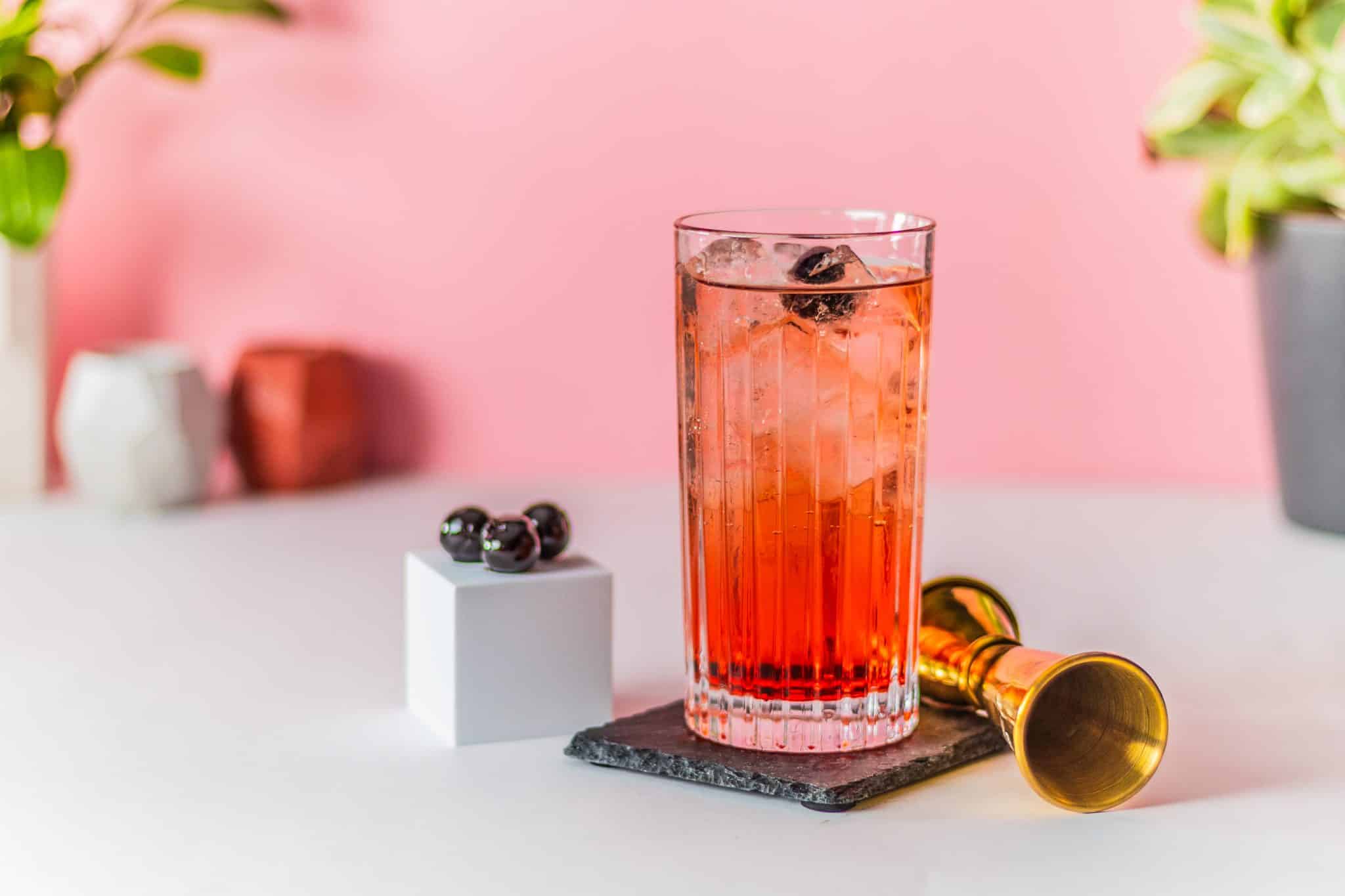
Check our full list of mixed drinks.