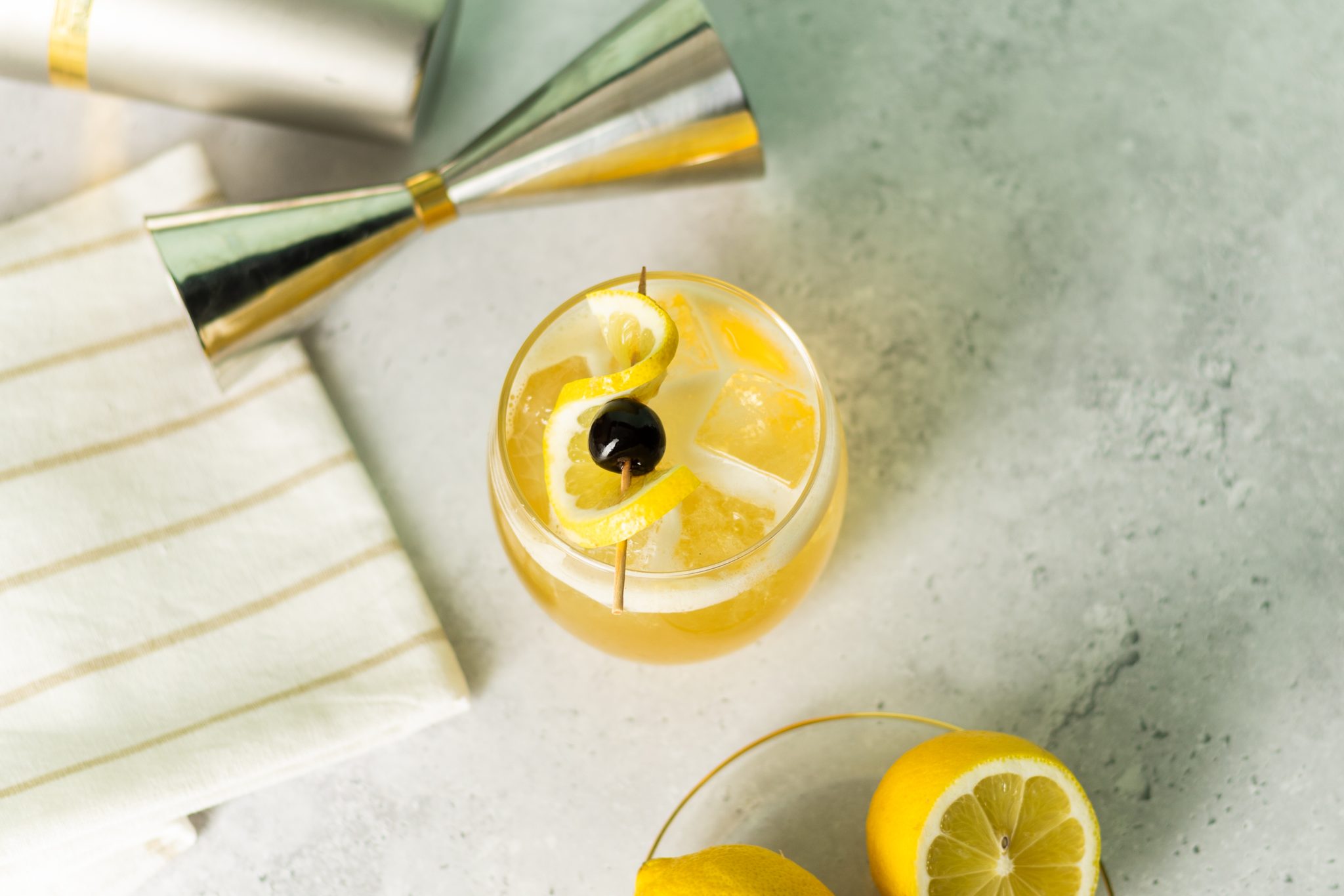
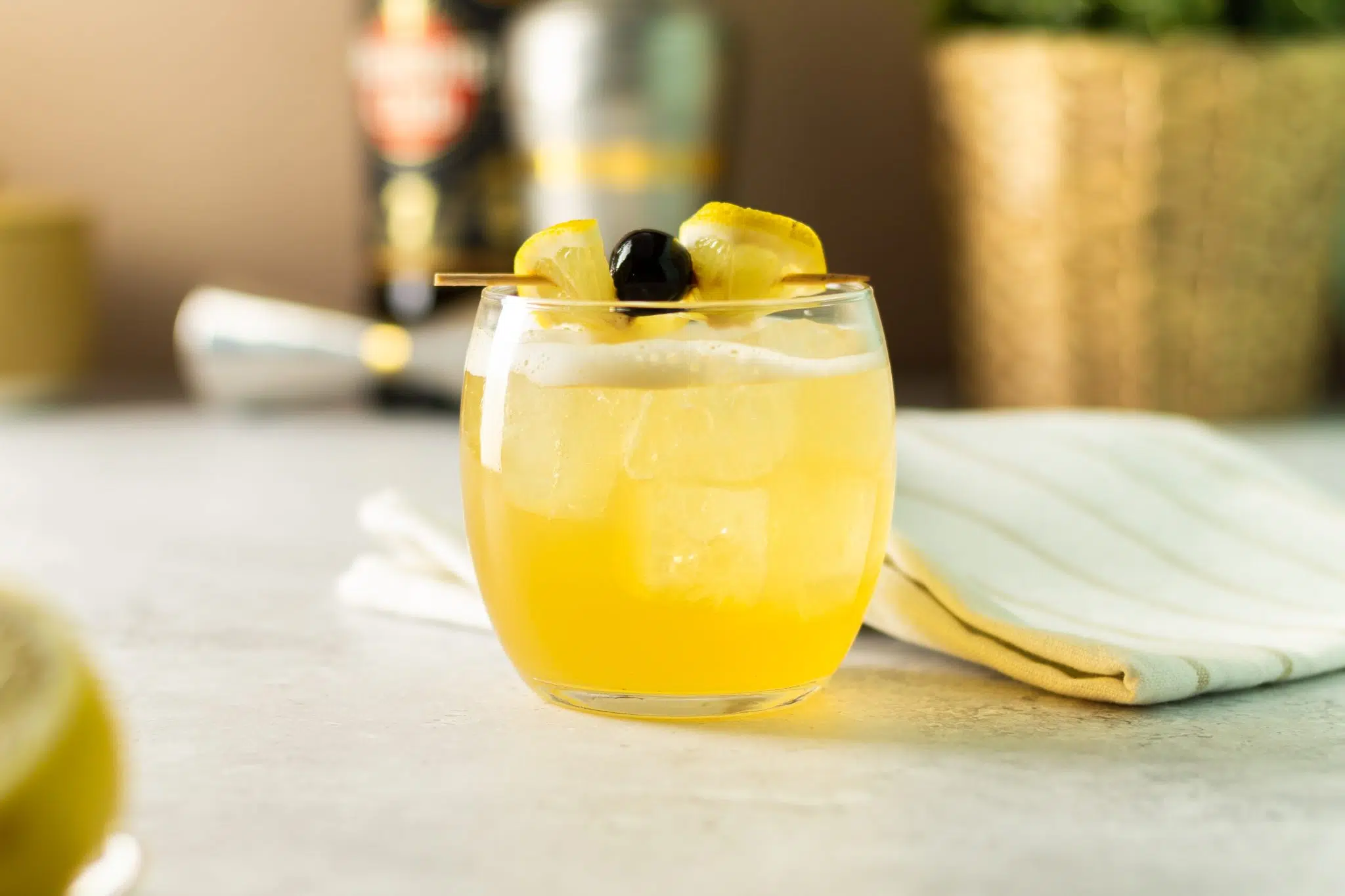
Check out this classic Rum Sour recipe! A harmonious blend of rum, lemon juice, and simple syrup.
Prep time:
1 minuteminute
Mixing time:
1 minuteminute
Servings:
1
Calories:
174 kl
Ingredients
2ozRum
¾ozfresh lemon juice
½ozsimple syrup
Ice cubes
Lemon slice or cherry, for garnish, optional
Equipment
Cocktail Shaker
Measuring Jigger
Strainer
Rocks Glass
Instructions
Chill the Glass: Start by filling your rocks glass with ice cubes or placing it in the freezer to chill.
Mix Ingredients: In the cocktail shaker, combine ½ oz simple syrup, ¾ oz fresh lemon juice, and 2 oz Rum.
Shake It Up: Add ice cubes to the shaker, seal it, and shake vigorously for about 15 seconds.
Pour: Strain the cocktail into your chilled rocks glass over fresh ice.
Garnish: Garnish with a lemon slice or cherry, if desired.
Notes
Substitutes:
Rum: If you run out of rum, a good alternative is bourbon. When I've tried it, the flavor becomes bolder and more oak-forward, giving a twist to the classic.
Lemon Juice: In the absence of lemons, limes work decently. The result is a bit more tart and vibrant. I sometimes prefer it, especially on a hot day.
Simple Syrup: Agave nectar or honey can be used instead. The sweetness profile changes slightly, with honey giving a more floral note and agave offering a smoother sweetness.
Making a Pitcher:
Scale: For a pitcher serving 8, multiply the ingredients by 8: 16 oz of rum, 6 oz of lemon juice, and 4 oz of simple syrup.
Mix: Combine the rum, lemon juice, and simple syrup in a large pitcher. Stir well.
Serve: Pour into ice-filled rocks glasses, garnish as desired, and serve immediately.
Making it Non-Alcoholic:
Rum Substitute: Swap rum with a non-alcoholic rum alternative, which you can find in specialty shops.
Follow the Steps: Use the non-alcoholic rum instead of regular rum and proceed with the original steps for a delightful non-alcoholic version.
Making it Vegan:
If using honey as a substitute for simple syrup, remember that traditional honey isn't vegan. Opt for agave nectar or maple syrup to keep your Rum Sour 100% vegan-friendly. Both offer unique flavor nuances that I've come to appreciate in various cocktails.
Check out this classic Rum Sour recipe! A harmonious blend of rum, lemon juice, and simple syrup.
Prep time:1 minuteminute
Mixing time:1 minuteminute
Servings:1
Calories:174
Ingredients
2ozRum
¾ozfresh lemon juice
½ozsimple syrup
Ice cubes
Lemon slice or cherry - for garnish, optional
Equipment
Cocktail Shaker
Measuring Jigger
Strainer
Rocks Glass
Instructions
Chill the Glass: Start by filling your rocks glass with ice cubes or placing it in the freezer to chill.
Mix Ingredients: In the cocktail shaker, combine ½ oz simple syrup, ¾ oz fresh lemon juice, and 2 oz Rum.
Shake It Up: Add ice cubes to the shaker, seal it, and shake vigorously for about 15 seconds.
Pour: Strain the cocktail into your chilled rocks glass over fresh ice.
Garnish: Garnish with a lemon slice or cherry, if desired.
Notes
Substitutes:
Rum: If you run out of rum, a good alternative is bourbon. When I've tried it, the flavor becomes bolder and more oak-forward, giving a twist to the classic.
Lemon Juice: In the absence of lemons, limes work decently. The result is a bit more tart and vibrant. I sometimes prefer it, especially on a hot day.
Simple Syrup: Agave nectar or honey can be used instead. The sweetness profile changes slightly, with honey giving a more floral note and agave offering a smoother sweetness.
Making a Pitcher:
Scale: For a pitcher serving 8, multiply the ingredients by 8: 16 oz of rum, 6 oz of lemon juice, and 4 oz of simple syrup.
Mix: Combine the rum, lemon juice, and simple syrup in a large pitcher. Stir well.
Serve: Pour into ice-filled rocks glasses, garnish as desired, and serve immediately.
Making it Non-Alcoholic:
Rum Substitute: Swap rum with a non-alcoholic rum alternative, which you can find in specialty shops.
Follow the Steps: Use the non-alcoholic rum instead of regular rum and proceed with the original steps for a delightful non-alcoholic version.
Making it Vegan:
If using honey as a substitute for simple syrup, remember that traditional honey isn't vegan. Opt for agave nectar or maple syrup to keep your Rum Sour 100% vegan-friendly. Both offer unique flavor nuances that I've come to appreciate in various cocktails.
What is a Rum Sour?
Rum Sour is a cocktail that combines rum with lemon juice, balanced by simple syrup. Originating from the “sour” cocktails family, its name straightforwardly reflects its flavor profile. While it might sound sophisticated, the Rum Sour is rooted in simplicity. Its charm lies in the basic ingredients coming together harmoniously. This classic Rum Sour formula stands the test of time, proving that simplicity is key sometimes.
What is a Rum Sour made of – The ingredients
Assembling a Rum Sour requires these ingredients:
Rum: The base spirit that provides the characteristic warmth and depth to the cocktail.
Lemon Juice: Introduces a citrusy tang, contrasting the rum’s richness sharply.
Simple Syrup: Balances the tartness of the lemon with sweetness, ensuring a harmonious flavor profile.
How do you make a Rum Sour?
Our steps make it simple for anyone to create a Rum Sour:
1
Start by chilling your Rocks glass, by filling it with ice cubes, or placing it in the freezer.
2
Pour simple syrup into the shaker.
3
Add fresh lemon juice to the shaker.
4
Add Rum to the mix.
5
Add ice cubes to the shaker to ensure a cold blend.
6
Seal the shaker tightly and vigorously shake it for about 15 seconds to mix and chill the ingredients.
7
Remove the ice cubes from your chilled rock glass and refill it with fresh ice cubes.
8
Strain the concoction into your chilled rocks glass over fresh ice.
9
Garnish with a lemon slice or cherry, if desired, to enhance the visual appeal and add a hint of extra flavor.
10
Enjoy your Rum Sour cocktail!
Rum Sour vs Whiskey Sour – What’s the difference?
The Rum Sour and Whiskey Sour, while belonging to the same “sour” family of cocktails, have distinct differences. The most evident distinction is their primary spirit: a Rum Sour is based on rum, whereas a Whiskey Sour uses whiskey. This difference in the base spirit leads to contrasting flavor profiles. Rum Sours often exude a sweeter, tropical taste, a nod to the sugarcane origins of rum. In contrast, Whiskey Sours carry a deeper, usually woodier flavor, reflecting the whiskey’s aging process. The specific types of rum and whiskey chosen can further diversify their tastes. For example, a dark rum imparts a richer, caramel-like flavor to the Rum Sour compared to a white rum. On the other side, a Whiskey Sour made with smoky bourbon will taste different from one crafted with a milder rye. Delving into their histories, the Rum Sour is deeply tied to the Caribbean, while the Whiskey Sour finds its roots in the American bartending tradition. Nevertheless, both drinks masterfully balance sweetness and sourness, securing their spots as beloved cocktails.
What is a Dark Rum Sour?
Dark Rum Sour is a variation of the classic Rum Sour cocktail that uses dark rum as its primary spirit. Dark rum, often aged longer than its light counterparts, brings a deeper flavor profile to the drink. This results in a more pronounced taste of molasses and caramel notes, giving the Dark Rum Sour a distinctive character. While it maintains the fundamental balance of sweetness and sourness in the original Rum Sour, dark rum enhances its complexity, making it a favorite for those seeking a bolder cocktail experience.
Can I make a Rum Sour without Egg White?
Many prefer their sours without the frothy addition. While egg whites can add a velvety texture and a lovely froth on top, only some are fans of the idea or the potential raw taste. Plus, if you’re vegan or allergic, it’s a no-go. The good news? A Rum Sour shines even without it. With the right balance of rum, citrus, and sweetener, you still get a vibrant, zesty drink that hits all the right notes. Cheers to keeping it simple and delicious!
Variations
Excited to experiment with something different? Here are some of our favorite recommendations:
Mojito: Adds a playful twist with fruits like strawberry or blueberry, elevating the classic freshness. The addition of these berries brings a natural sweetness that I find irresistible, creating a delightful contrast with the mint and lime.
Dark and Stormy: Sometimes features a splash of apple cider for a unique, autumnal spin. The apple cider complements the ginger beer’s spiciness, adding a cozy, seasonal touch that I enjoy, especially on chilly evenings.
Strawberry Daiquiri: Often made with fresh strawberries for a more vibrant and authentic berry flavor, compared to the frozen variety. The use of fresh strawberries offers a burst of natural flavor, enhancing the drink’s refreshing qualities.
Piña Colada: Can be enriched with a hint of nutmeg or cinnamon, giving it a warm, aromatic twist. These spices add depth to the tropical flavors, creating a more nuanced and sophisticated profile.
Hurricane: Sometimes includes a splash of grenadine for added sweetness and a deeper red hue, making it visually stunning and slightly sweeter.
Jungle Bird: May incorporate homemade pineapple syrup instead of juice, intensifying the pineapple flavor. The homemade syrup brings a richer, more concentrated pineapple essence, elevating the drink’s tropical character.
Scorpion Bowl: Occasionally prepared with a float of overproof rum on top, ignited for a dramatic presentation. This flaming touch adds a smoky flavor to the drink, enhancing its exotic appeal.
Planter’s Punch: Can be customized with a variety of bitters for added complexity. Different bitters introduce subtle flavor variations, allowing for a more personalized experience.
Rum Swizzle: Often includes a dash of Angostura bitters, providing a slight herbal undertone. The bitters balance the sweetness of the juices, adding a layer of complexity that makes the drink more intriguing.
Cable Car: Sometimes replaces the orange liqueur with a spiced orange syrup, offering a more pronounced orange flavor. This modification brings a zesty, spiced dimension that complements the rum beautifully.
Knickerbocker: Often made with fresh raspberries instead of raspberry syrup, giving it a fresher, fruitier taste. The fresh raspberries add a tart edge and a brighter flavor profile, making it more refreshing.
History and Origin
The Rum Sour finds its roots in the broader family of “sour” cocktails, which have been popular since the 19th century. The basic idea of a sour revolves around the balance of three primary elements: a spirit, a sweetener, and citrus juice. This concept of mixing spirits with citrus to create palatable and refreshing beverages can be traced back even further, with British sailors mixing rum with lime juice in the 18th century to combat scurvy. However, this mixture wasn’t a Rum Sour per se.
In the United States, the mid-to-late 1800s saw the rise of the sour format in the world of mixology. Bartenders began crafting and serving various sours, including those made with whiskey, brandy, and rum. These drinks gained popularity rapidly, and establishments often listed them prominently on their menus.
The Rum Sour owes explicitly much of its heritage to the Caribbean, where rum production thrived. As rum went from the islands to mainland bars, innovative bartenders started experimenting with the spirit, using the sour formula as a foundation. Over time, with its enticing balance of sweet, sour, and strong elements, the drink secured its spot in the cocktail lexicon.
The cocktail’s simplicity, combined with the rich cultural tapestry of rum, ensured its lasting popularity. Whether sipped in a sophisticated city bar or a beachfront cabana, the drink blends history, tradition, and timeless appeal.
See More
Did you make this recipe?
We’d love to see how you crafted our recipes! Tag us on Instagram at @_drinksworld
FAQ
How many calories does a Rum Sour typically contain? It typically has around 200-250 calories, depending on the specific ingredients and their quantities.
What's the strength of a Rum Sour in terms of ABV? The ABV (Alcohol by Volume) largely depends on the rum used, but the drink generally ranges between 20-30% ABV.
How strong is a Rum Sour in terms of proof? Taking the aforementioned ABV, the drink typically falls between 40-60 proof.
Which alcohol serves as the primary spirit in a Rum Sour? Rum, as the name suggests, is the primary spirit.
In what type of glass should a Rum Sour be served? Traditionally it's served in a Rocks or Old Fashioned glass.
What does a Rum Sour taste like? A Rum Sour offers a balanced blend of sweet and sour, with the warmth of rum and the tang of citrus complemented by the sweetness of the simple syrup.
What's the general ratio of ingredients in a Rum Sour? The classic ratio is 2 parts rum to ¾ part lemon juice and ½ part simple syrup.
What is a Caribbean Sour? A Caribbean Sour is a cocktail that blends the flavors of rum, citrus, and often tropical fruit juices, reflecting the vibrant taste profiles of the Caribbean region.
Does Rum and Lemonade pair well together? Yes, rum and lemonade pair well together, offering a refreshing combination of sweet and tart flavors.
What is a White Rum Sour? A White Rum Sour is a cocktail made primarily with white rum, citrus juice, and a sweetener, highlighting the crisp and clean flavors of the light rum.
We use cookies or similar technologies for technical purposes and, with your consent, for other purposes as specified in the cookie policy. Use the “OK” button to consent or customize and deny your consent.
Functional Always active
The technical storage or access is strictly necessary for the legitimate purpose of enabling the use of a specific service explicitly requested by the subscriber or user, or for the sole purpose of carrying out the transmission of a communication over an electronic communications network.
Preferences
The technical storage or access is necessary for the legitimate purpose of storing preferences that are not requested by the subscriber or user.
Statistics
The technical storage or access that is used exclusively for statistical purposes.The technical storage or access that is used exclusively for anonymous statistical purposes. Without a subpoena, voluntary compliance on the part of your Internet Service Provider, or additional records from a third party, information stored or retrieved for this purpose alone cannot usually be used to identify you.
Marketing
The technical storage or access is required to create user profiles to send advertising, or to track the user on a website or across several websites for similar marketing purposes.