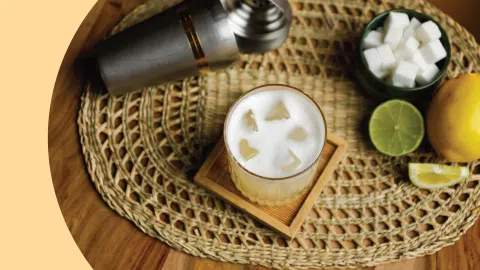
In the world of mixology, the debate between shaking and stirring cocktails is as spirited as the drinks themselves. This age-old question has stirred up conversations (and martinis) in bars across the globe.
The famous line “shaken, not stirred” from James Bond has undoubtedly added an air of sophistication and intrigue to shaking a cocktail. But why did Bond prefer his martini this way? Shaking a cocktail chills it quickly and creates a frothy and slightly cloudy finish. Then again, some might argue that Bond’s choice was a faux pas because traditional martinis are typically stirred to maintain their crystal-clear appearance!
Ultimately, though, whether you shake it up like 007 or stir it down like a classic mixologist – we believe that each technique brings its special touch to the process of making cocktails.
Let’s look at the differences and when to stir vs when to shake a drink.
The differences between shaking and stirring
Shaking is vigorously mixing ingredients in a cocktail shaker while stirring is gently blending them in the glass.
As our online bartending course instructor Gavin Wrigley explains, “Shaking is more vigorous and introduces air into the mix, making the drink frothy or cloudy. It’s especially useful when ingredients are harder to mix, like citrus or egg whites.” Stirring, on the other hand, is gentler, doesn’t add froth or cloudiness, and is used when ingredients don’t need as thorough a blend. Gavin also adds, “Shaking chills the drink much faster than stirring, which can be a key factor in cocktail preparation.”
Shaken vs. Stirred Martini
Bartenders and cocktail lovers often debate whether to serve a martini shaken or stirred, as the method affects taste, texture, and appearance.
A shaken martini involves shaking gin (or vodka), vermouth, and ice in a cocktail shaker. This method chills the drink quickly and introduces tiny air bubbles, which make the martini slightly cloudy and lighter in texture. Shaking also causes more dilution due to melting ice.
In general, shaking a cocktails has 4 significant effects:
- Chilling and Dilution: Shaking quickly lowers the drink’s temperature and adds the right amount of dilution.
- Thorough Mixing: Ingredients blend thoroughly, especially for cocktails with juices, cream, or egg whites.
- Aeration: Shaking introduces small air bubbles, creating a slightly frothy, smoother texture.
- Enhanced Flavor Balance: Mixing ingredients thoroughly ensures a balanced taste throughout the drink.

In a stirred martini, the ingredients are gently stirred over ice. This method creates fewer air bubbles, resulting in a clear and smooth drink. Stirring reduces dilution, often leading to a stronger-tasting martini.
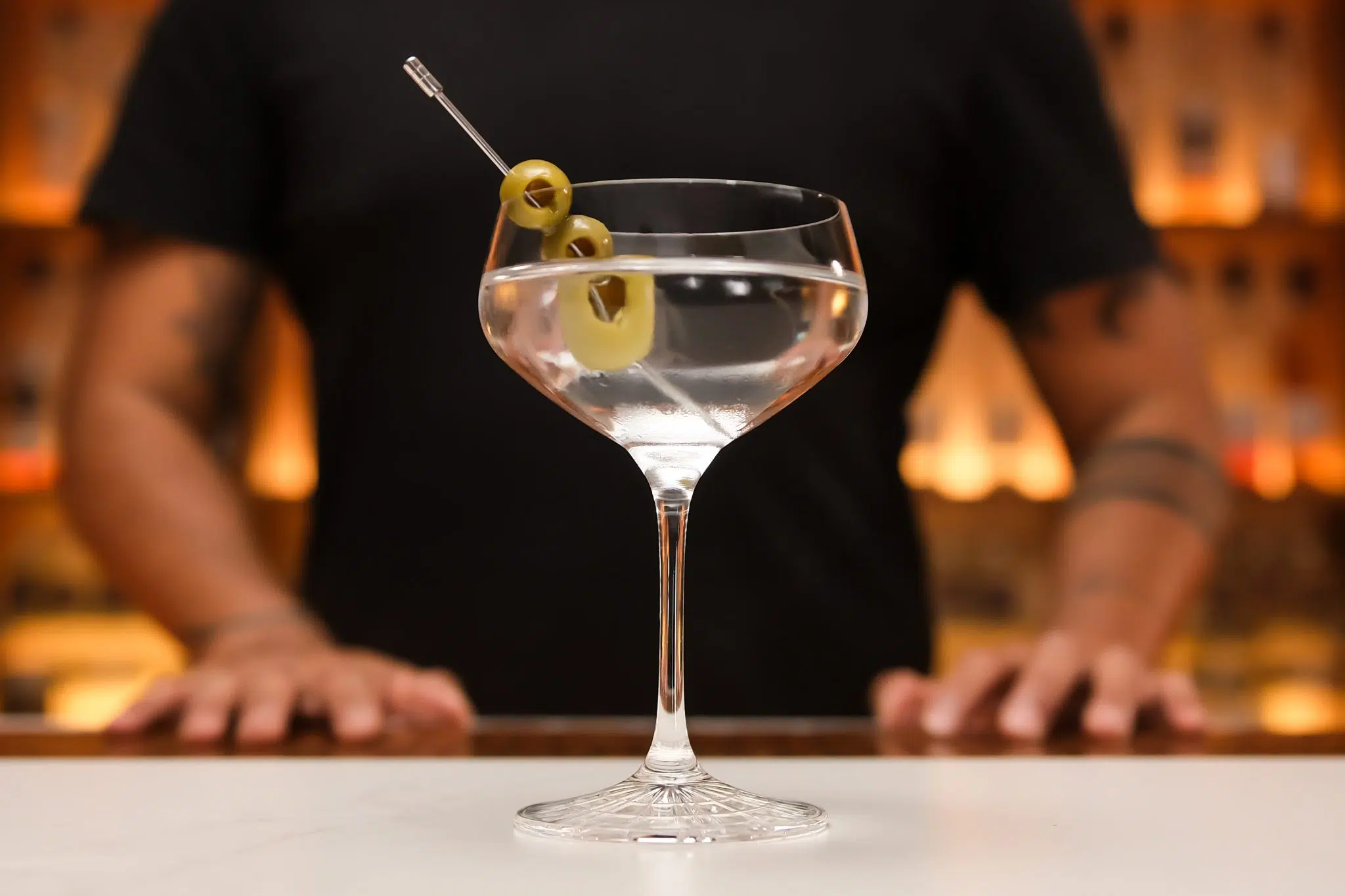
Some argue that shaking can “bruise” the gin, which means the gin’s botanicals may become more pronounced, potentially altering the flavor. Others find no noticeable difference in taste between the two methods.
Ultimately, the choice between shaken or stirred depends on personal preference. Shaking makes the martini colder and lighter in texture, while stirring keeps it clear, smooth, and slightly stronger.
When to shake and when to stir drinks and cocktails?
Bartenders often follow these guidelines:
- Shake Cocktails with Thick Ingredients: Shake drinks containing fruit juice, cream liqueurs, simple syrup, egg whites, or dairy. These ingredients need vigorous shaking for 10-15 seconds to mix thoroughly. Examples include the Daiquiri, Cosmopolitan, Whiskey Sour, and Piña Colada.
- Stir Spirit-Forward Cocktails: Stir cocktails that are mostly alcohol, like the Martini or Old Fashioned. Stirring gently with a long spoon for 20-30 seconds chills and dilutes the drink without adding air. Examples include the Manhattan, Rob Roy, and Negroni.
- Consider Clarity: If you want a clear cocktail without cloudiness from air bubbles, choose stirring over shaking.
- Think About Temperature and Dilution: Shaking cools a drink faster and adds more dilution than stirring.
While these are good guidelines, personal preference always plays a part in making cocktails – so feel free to experiment!