There are many strangely-named cocktails out there, but have you ever wondered about the story behind these names? It’s hard to choose the top ten strangest drink names—as there are plenty—but to cut down the list, it’s better to ignore the downright gross and inappropriate names (which are many!).
A Lonely Island Lost in the Middle of a Foggy Sea

A Lonely Island Lost in the Middle of a Foggy Sea certainly is a mouthful to order, especially after a drink or two! As the name may suggest, this is a Tiki cocktail created by Paul McGee from Three Dots and a Dash in Chicago in the 2010s.
The name comes from the lyrics of a song called Bali Ha’i (also the name of another cocktail).
‘Mos’ people live on a lonely island
Lost in de middle of a foggy sea.’
The cocktail recipe includes three types of Rum, pineapple juice, lime juice, cold brew coffee and Demerara sugar syrup.
Horsefeathers

Horsefeather is a highball-style cocktail from the 1990s with links to Kansas City, where it is still widely ordered. Horsefeather is made with Rye Whiskey, a lemon wedge, ginger beer and Angostura bitters.
The cocktail’s origin is unclear, but it is likely based on a recipe from Gary ‘Gaz’ Regan’s book The Bartender’s Bible from 1991. Regan’s cocktail ‘Horse Feathers’ was made with a blended Whiskey, ginger ale and bitters, and it was probably a riff from the ‘Horse’s Neck’ cocktail.
Around the same time as the book came out, a Lawrence (Kansas City) bartender called Jeremy Sidener needed new mixed drinks to add to their menu at Paradise Café & Bakery. That’s when he came across Horse Feathers.
Sidener used Rye Whiskey instead of a blend and ginger beer instead of ginger ale, as the former was what they had available at the bar. They then eventually edited the name to ‘Horsefeather,’ as it simply sounded better. The name stuck and spread all over Kansas City and beyond.
The term ‘horsefeathers’ was a slang term for horse excrements. Nowadays, it means nonsense, although no one really uses the original term any longer. Horse Feathers was also the title of a 1932 Marx Brothers’ film.
Income tax

Income Tax is very similar to the classic Bronx cocktail. In fact, the cocktail can be found in the same book as Bronx, The Savoy Cocktail Book by Harry Craddock, which dates back to the 1930s.
The recipe includes equal measures of Italian (sweet) and French (dry) Vermouths, dry Gin, Angostura bitters and fresh orange juice.
The origin of the name is unclear, but it’s likely it was named after the income tax laws introduced during the 1920s. The use of bitters could be a nod to the bitter-sweet task of having to pay taxes.
Harvey Wallbanger
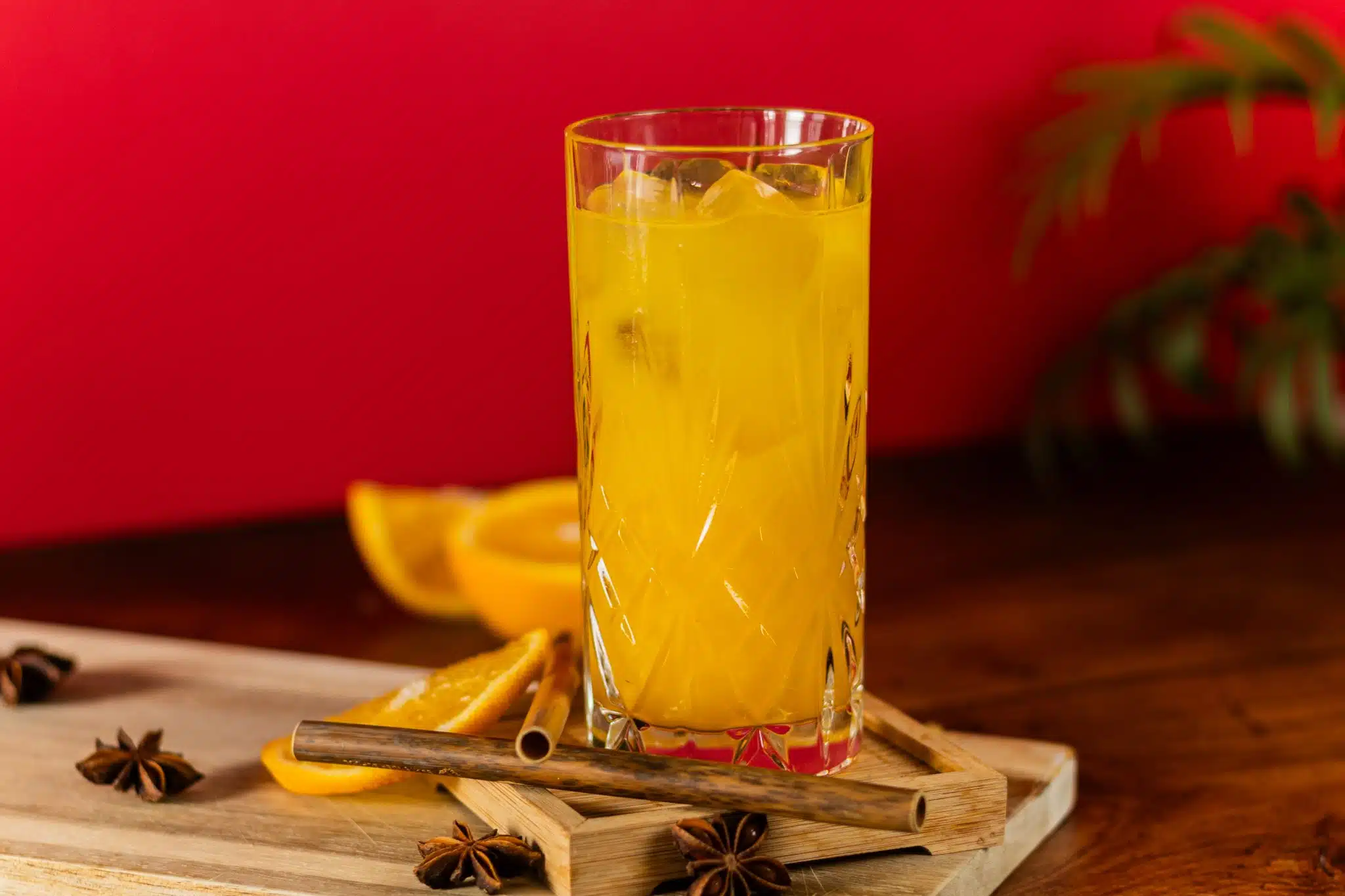
The Harvey Wallbanger is basically a Screwdriver (fresh orange juice & vodka) with a Galliano top. The cocktail takes its name from a local surfer, Tom Harvey, from the 1950s. He used to frequent the Duke’s Blackwatch Bar on Sunset Boulevard in Hollywood.
He had just lost a surfing competition. Depressed by the result, he went to his favourite bar to order his favourite drink, Screwdriver with Galliano herbal liqueur. He banged his head against the wall to relieve his frustration, hence the bar owner Donato “Duke” Antone named the drink Harvey Wallbanger. Another story mentions the same surfer and his bad habit of entering the bar with his surfboard under his arm, banging the walls with it as he made his way to his usual spot.
Philadelphia Fish House Punch

As the name suggests, this Philadelphia Fish House Punch cocktail comes from a fishing club in Philly. The earliest record of the punch was on a note written by the secretary of the embassy of Virginia Commissioners back in 1744.
It describes a meeting of locals at Schuylkill River in Philadelphia where they served “a bowl of fine Lemon Punch big enough to have swimmed half a dozen of young geese.” The fishing club was actually a gentlemen’s club where the men would smoke their cigars and drink Whiskey and their beloved punch.
Some say the recipe was first created to celebrate women being allowed into the clubhouse to join the club’s Christmas party. The punch bowl had to be extra large to fit in the huge ice block.
The punch is made with Peach Brandy, Cognac, Rum, lemon juice and sugar. Some recipes add cold water or chilled black tea as an extender liquid due to the size of the bowl.
Burnt Fuselage
Burnt Fuselage refers to the aftermath of a close-range aerial combat known as a dogfight. The cocktail therefore has links to the First World War. Apparently, the soldiers created the recipe so they could have something potent to drink after a battle. The drink hit peak popularity post-war, and it was seen as a symbol of remembrance. The punchy cocktail was popular amongst writers and artists in 1920s Paris.
This forgotten classic is made with equal measures of Cognac, dry Vermouth and Grand Marnier.
Salty Dog

The Savoy Cocktail Book from the 1930s had a cocktail called Greyhound, which was made with Gin and grapefruit juice. In the 1950s, the same recipe with an added salt rim was called Salty Dog.
Salty Dog is a term that dates back to the early 1900s. Sailors used to coat the rim of their glass with salt to fight seasickness, and Gin was a popular drink amongst sailors. The term Salty Dog was also a common name for someone who spent a long time at sea.
Fast-forward to the 1970s, when vodka became the most popular spirit of choice in America, and many older recipes, such as Greyhound and Salty Dog, were amended to use vodka instead of gin.
Monkey Gland

The Monkey Gland cocktail’s name comes from a horrid medical procedure.
Sometime in the 1920s, a French surgeon believed that transplanting monkey testicles into the human scrotum would prolong life expectancy and increase vitality.
He actually used the method several hundreds of times over the period of a few years!
The drink itself doesn’t have anything to do with monkeys or the method, but it was invented around the same time as this process was in use. The recipe includes dry Gin, fresh orange juice, grenadine and Absinthe.
Fuzzy Navel

Fuzzy Navel is a popular low-ABV serve from the 1980s. The name doesn’t sound that appealing, but you’ll be glad to know it has nothing to do with hairy belly buttons!
Fuzzy comes from furry peaches, and navel is a type of orange. So, as the name suggests, the drink is made with equal measures of Peach Schnapps and fresh orange juice.
Cement Mixer
Cement Mixer is a shooter rather than a cocktail. The name comes from the texture of the drink.
The layered shot is made with equal measures of Bailey’s cream liqueur (or an alternative cream liqueur) and fresh lime juice. Once the ingredients mix in your mouth, the fat from the cream curdles and, together with the acidic lime, becomes a thick sludge that sticks to your teeth like cement.
It’s been popular amongst partygoers to prank their fellow drinkers with this shooter. The people who have braved the shot have said the taste is actually much better than you might expect.