Certain drinks conjure up a vivid image of a particular destination. Whether that’s because the source ingredient is grown there or that’s where they were first mixed, some drinks are inextricably linked to their destination.
Here we’ll take a look at 8 drinks and examine the history behind them and the places they are connected to.
Sangria, Spain
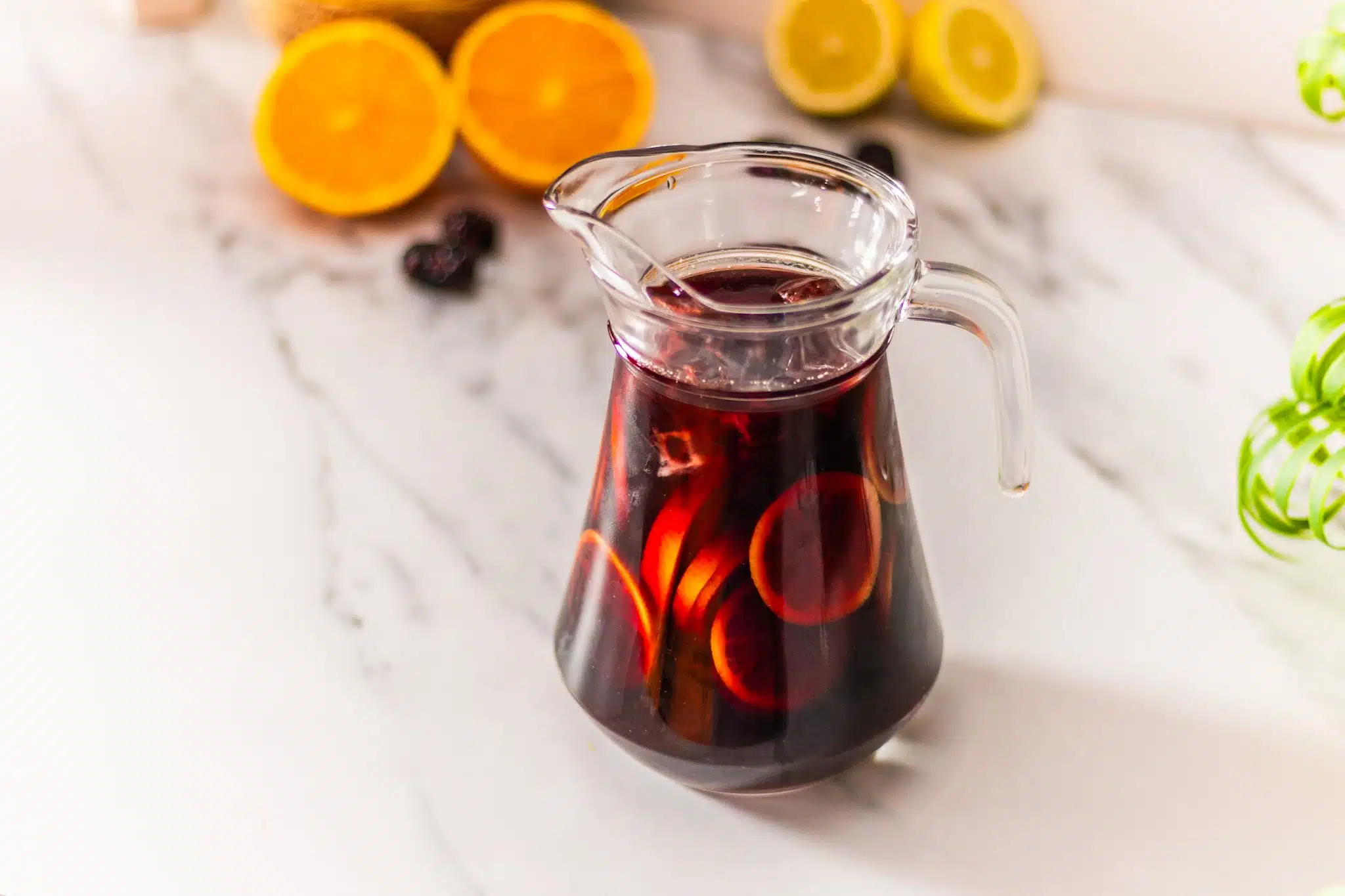
We were adding spices and fruits to wine long before Sangria had a name. The Ancient Greeks and Romans did it to kill off bacteria and hide the taste of cheap wine, but sometime in the 18th century, Spaniards began adding fruit and sugar to red wine and calling it Sangria, which means ‘blood.’
It’s thought to have been invented, in its current form, by Spanish peasants who added fruits to wine simply because they had these fruits to hand. But however it evolved, Sangria is as Spanish as Paella, and always will be.
Discover our Sangria and Fall Sangria recipes
Sake, Japan

Although it was actually first made in Ancient China, sake will now forever be Japan’s drink.
Written accounts of Japanese people drinking sake at funeral ceremonies date back to the third century, and while the drink fell in popularity in China, in Japan the love for sake grew and grew.
Japan took the rice based drink and began producing it in greater quantities than China in the 10th century and moved the sake from being a ceremonial drink to something more mainstream that could be enjoyed anytime.
Ouzo, Greece

The reason you don’t see ouzo much outside of Greece is because it’s protected and can only be called ouzo if it’s made in Greece. The base spirit of ouzo, a bit like grappa, is flavored with anise, giving it that liquorice taste, and it’s enjoyed with ice or a little water, which turns the clear liquid milky white.
Just when ouzo was first made in Greece is unknown, though it may have had a predecessor called Tsipouro, but this didn’t have the aniseed flavor or the high alcohol content. We do know that the first ouzo distillery opened in 1856, and it’s been the drink of Greece ever since.
Whisky, Scotland

There’s a bit of a to and fro about where whisky originated. Though it’s certainly the drink of Scotland today, it may have originated in Ireland. At least that’s what written records suggest.
While the earliest document on distilling in Scotland appeared in 1494, in Ireland it was in 1405 and it’s thought that Irish monks began distilling drinks after learning how to distil perfume on their travels around Europe.
But while both counties claim it as theirs and claim theirs is the best, whisky has certainly flourished more in Scotland and it’s this country that most people associate the drink with today.
It seems the Scottish simply took whisky and ran with it. There are over 150 whisky distilleries in Scotland today, while in Ireland there are around 40, that number massively up on the four Ireland had back in 2010.
Discover our collection of Scotch Cocktails and Whisky Drinks
Tequila, Mexico
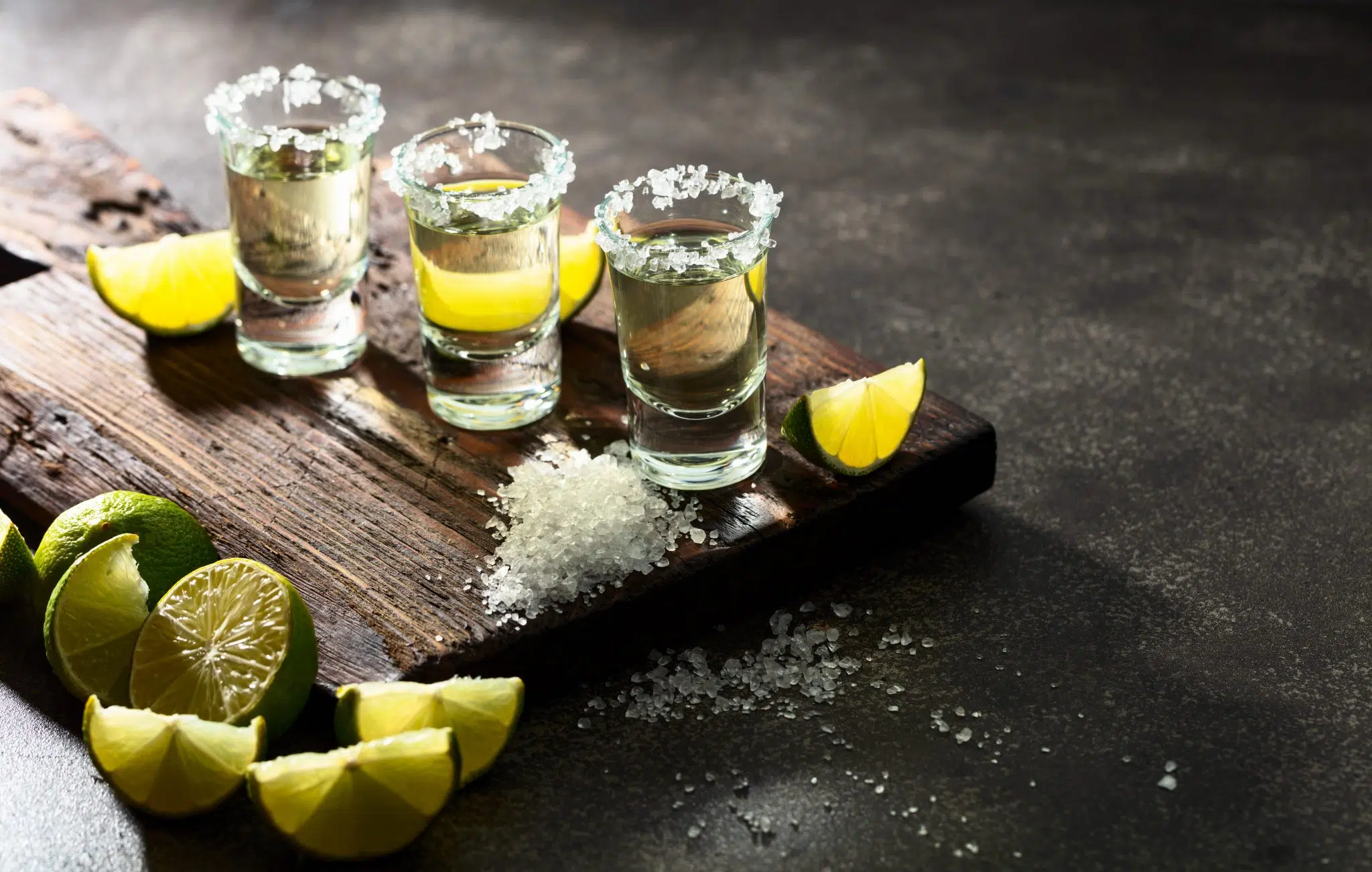
Tequila has been made in Mexico since the 17th century, using agave, which grows freely in the country, and there’s no dispute that Mexico is where tequila comes from. But more than that, the town of Tequila in Mexico can be considered the drink’s spiritual home.
While it’s unlikely tequila was first made in Tequila, this is where Mexico’s most popular distillery was based, and this is how the drink got its name.
Before tequila, there was a fermented agave drink known as Pulque by the Aztecs. The Spanish arrived and modified the drink by distilling it and producing Mezcal, the father of tequila.
Discover our collections of Tequila Cocktails and Mezcal Drinks
Port, Portugal

Of all the drinks typical of their place of inception, port is perhaps the best known. The name of the drink is literally in the name of the country. Portugal.
But the story of port is one of accident rather than a deliberate move to make this drink famous. Portugal and England are old allies and have been trading without friction since at least the 14th century. When the Portuguese began making wine in Douro, where conditions were ideal for producing full bodied wines just for the English, they used the port of Oporto for the first time.
As it was a bit further than their usual trading routes, they fortified the wine with brandy to help preserve it. This particular wine was named Oporto wine, and then became known as port.
Related: Porto Flip Cocktail
Pisco, Peru

The people of Chile also lay claim to the brandy-like drink, Pisco, but for the sake of argument we’re citing Peru because, just like port from Portugal, Pisco is named after the Peruvian town, Pisco. 16th century Spanish settlers in the area planted grapevines to make their own wine, and at some point, perhaps by locals, these grapes were used to make a clear brandy-like liquor. It was named Pisco on account of the port town, Pisco, being the route used to distribute the drink throughout Peru and beyond.
Absinthe, Switzerland

The name Absinthe comes from the Greek Absinthion, telling us the green devil was originally made in Greece, which it was, but not as a recreational drink. Absinthe was a medicine.
The herb, wormwood, has been used to cure ills for a long time, and the Greeks simply soaked the leaves in wine or spirits and gave it to women in childbirth, amongst other things.
But the absinthe we know today, a distilled spirit mixed with wormwood, fennel and anise, and other herbs, first appeared in Switzerland in 1792 when Dr Pierre Ordinaire produced bottles of Absinthe for sale as a medicinal elixir.
When Major Dubied got his hands on the recipe he opened the very first absinthe distillery in 1797. It was also in Switzerland that a man murdered his family after drinking too much absinthe, resulting in the drink being banned in the country in 1908.
So the drink that began in Switzerland, ended in Switzerland, and wasn’t made legal again until 2005.