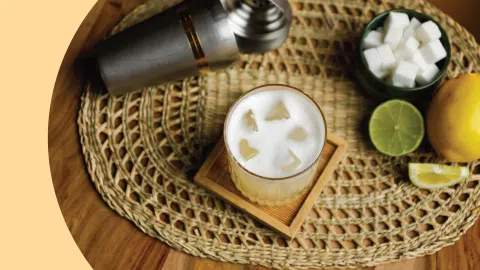
At drinksworld.com, we’re all about the details that make a great cocktail truly unforgettable, and one of the most fundamental (yet often overlooked) skills in the bartending world is knowing how to pour liquor. Sounds simple, right? Just tip the bottle and let it flow! But there’s a lot more to pouring than meets the eye. A perfectly measured pour can mean the difference between a balanced cocktail and a boozy disaster. The pour matters whether you’re making a stiff drink, crafting a delicate cocktail, or serving neat spirits.
This page is about the art and science of pouring liquor, from the techniques you’ll need to master, to the tools that will help you pour like a pro.
Why Does Pouring Liquor Matter?
You might be thinking: “Does pouring really matter that much?” The answer is yes, it does. Here’s why:
Consistency and Accuracy
Imagine this: you’re making your signature cocktail for friends, but the first drink is a little too strong, the second one is too weak, and by the third, you’re guessing how much you’ve poured. Sound familiar? When you know how to pour liquor properly, every drink will come out the same, with the perfect balance of flavors. Consistency is the key to creating a memorable cocktail experience, whether you’re behind the bar or mixing at home.
Flavor Balance
Every cocktail has a delicate balance of flavors—the spirit, the mixer, the garnish, and maybe a few dashes of bitters. Pour too much liquor, and the drink becomes overpowering. Pour too little, and it lacks the punch that makes it satisfying. Getting the pour right is essential to achieving the perfect flavor profile.
Presentation
Let’s face it: how you pour a drink says a lot about your confidence and skill behind the bar. A smooth, controlled pour not only makes you look like a pro, but it also ensures your guests see you take care and precision with each drink.

Tools of the Trade: What You Need to Pour Liquor Properly
Before you start pouring, make sure you’ve got the right tools at hand. Here are the essentials:
Jiggers
There are two primary types of jiggers used in bartending: double-sided cone-shaped jiggers and single jiggers or shot glasses that feature various fill lines for accurate measurements.
Jiggers come in various sizes and styles, including Japanese jiggers, which offer more precision. A good jigger will ensure your drinks are consistent every time.

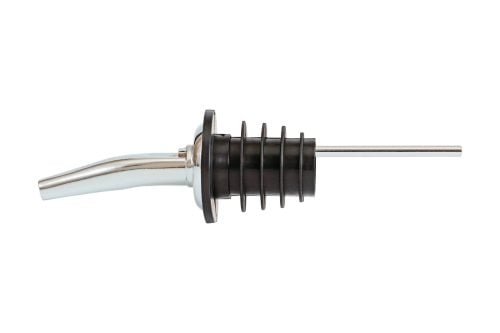
Pour Spouts
Pour spouts (also known as speed pours) are the metal nozzles you’ll see on liquor bottles at bars. They control the flow of the liquid, making it easier to free-pour accurately and quickly. If you’re serious about bartending, investing in a few pour spouts is a game-changer.
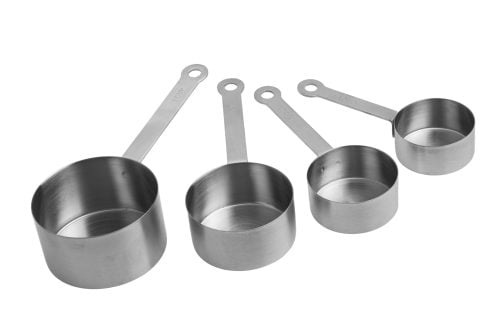
Measuring Cups
For batch cocktails or when precision is key, measuring cups come in handy. Use graduated measuring cups to pour large quantities of liquor for punches or big-batch cocktails.
The Techniques: How to Pour Liquor Like a Pro
Now that you’ve got your tools, it’s time to get into the techniques. Whether you’re free pouring, using a jigger, or working with a pour spout, here’s how to pour liquor properly.
Free Pouring
Free pouring is a skill that takes time to master but looks impressive once you’ve nailed it. It’s the process of pouring liquor directly from the bottle without using a measuring tool. Bartenders use a counting method to measure the pour (usually a “four-count”).
How to Free Pour:
- Hold the bottle by the neck with your dominant hand.
- Tip the bottle upside down, make sure your liquid falls straight down, and start counting: “1, 2, 3, 4.” Practice until each count is approximately equal to ¼ oz, so a “4-count” pour gives you 1 oz.
- Practice this until you can consistently hit the mark every time.
Pro Tip: Practice free pouring with water over a measuring cup to see how accurate your count is. This will help you develop muscle memory for the correct pour.
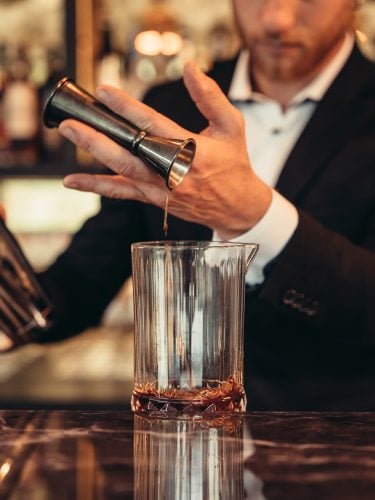
Using a Jigger
If you’re just starting out or want to ensure absolute precision, jiggers are your best friend. Using a jigger guarantees you get the exact amount of liquor every time, and it’s the preferred method for many classic cocktails where ratios are everything.
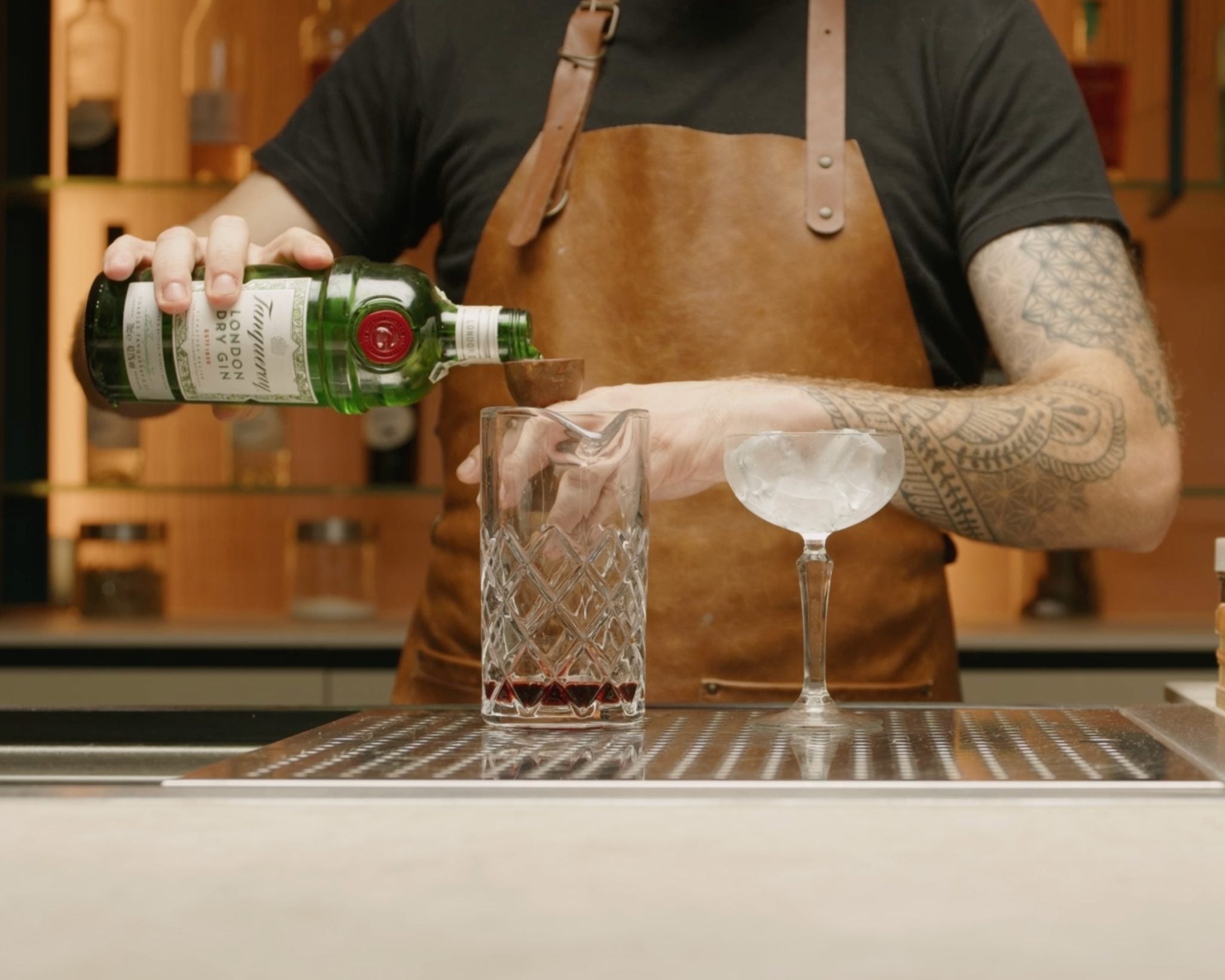
How to Use a Jigger:
- Hold the jigger in one hand and the bottle in the other.
- Pour the liquor into the jigger until it’s filled to the brim.
- Use a steady hand to pour the liquor into the glass or shaker without spilling.
- Always use both sides of the jigger if the recipe calls for different measurements (like 1 oz of one liquor and 0.5 oz of another).
Pro Tip: Some bartenders hold two different jiggers in one hand having the possibility to cover different measurements quicker. Practice this to speed up your cocktail-making game!
Pouring with a Spout
A pour spout is an essential tool for any high-volume bar, and it’s great for home bartenders too. Pour spouts allow you to control the flow of liquor making it essential for free pouring.
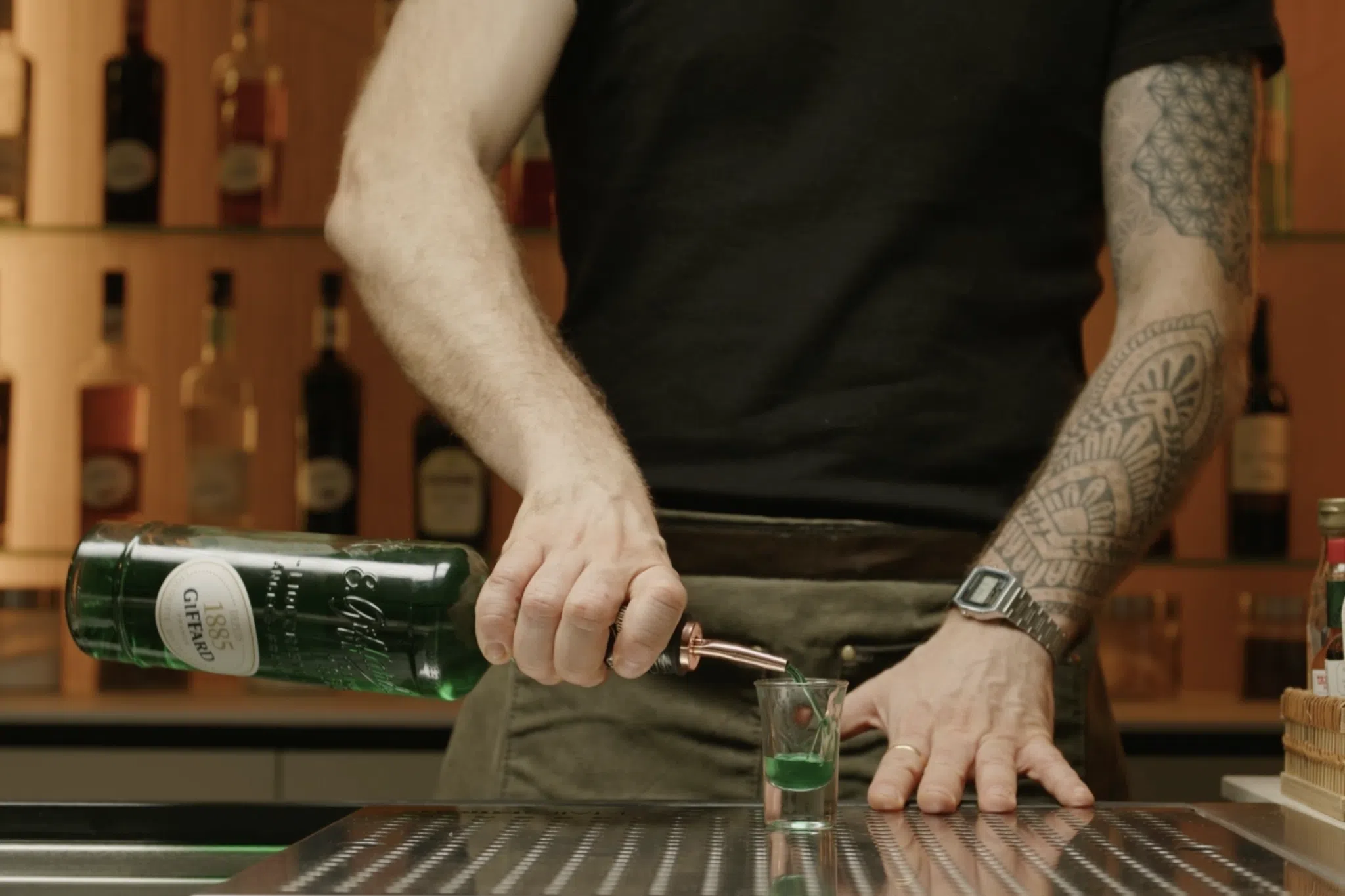
How to Pour with a Spout:
- Insert the pour spout into the neck of the bottle.
- Hold the bottle with the spout facing down, keeping a firm grip on the neck.
- Use the same “counting method” as with free pouring to measure the amount.
- Make sure to keep the pour steady and controlled.
Pro Tip: Always check your pour spouts for any clogs or dirt before using them. A clogged spout can mess with your pour speed, often leading to under-pouring.
How to Pour for Different Types of Drinks
Let’s go over how to approach different styles of drinks:
Pouring Straight Spirits (Neat, On the Rocks)
When pouring spirits neat or on the rocks, precision is key. You want just the right amount of liquor to let the spirit shine without overpowering the drinker.

Tips:
- For a neat pour, stick to 1.5–2 oz, depending on your glass size.
- When pouring over ice, pour the liquid slowly avoiding any spillage.
Pro Tip: Use a jigger for neat pours to ensure you get the perfect serving size every time. It also looks more professional.
Pouring for Cocktails
Cocktails often involve a mix of ingredients, and getting the right pour ensures the balance of flavors. Too much liquor can overpower the mixers, while too little can leave the cocktail lacking that satisfying punch.

Tips:
- Stick to the recipe’s ratios—if it calls for 2 oz of liquor, measure exactly 2 oz.
- Use a jigger for accuracy or make sure to be well trained in free pouring.
Pro Tip: For drinks like a Margarita or Daiquiri, where the balance between sweet, sour, and spirit is key, precision with your liquor pour is vital. Don’t eyeball it—use a jigger!
Highballs and Mixed Drinks
Highballs (like a Gin & Tonic or a Rum & Coke) usually involve a spirit with a larger amount of mixer. Pouring too much liquor can overwhelm the mixer, while too little leaves the drink flat.

Tips:
- The typical ratio for highballs is 1:3 (one part liquor to three parts mixer).
- Use a jigger to measure the liquor, then top with the mixer.
Pro Tip: For highballs, you can often get away with free pouring once you’re comfortable with the counts. Just remember the 1:3 ratio to keep the drink balanced.
Shots
Pouring a shot seems straightforward, but even here, precision matters. A standard shot is typically 1.5 oz, but this can vary depending on your location or personal preference.

Tips:
- If using a pour spout, don’t turn the bottle upside down too quickly you risk spilling liquor.
- When free pouring, use the 4-count method counting up to 6 to have a full 1.5 oz pour.
Pro Tip: For layered shots, like a B-52, pour slowly over a spoon to keep the layers intact. This technique requires a steady hand but looks impressive!
Pouring for Presentation: Showmanship Matters
How you pour is just as important as how much you pour. A smooth, controlled pour shows confidence and skill behind the bar. Here are some tips to elevate your pouring technique:
Avoid Spills
Spilling liquor while pouring isn’t just messy—it’s wasteful. A controlled, steady pour prevents spillage and ensures your measurements are accurate.
Tips:
- Hold the bottle close to the glass, about 2–3 inches above the rim.
- Tip the bottle slowly and smoothly to control the flow.
- Always finish with a clean pull-back to avoid dripping.
Add Flair to Your Pour
If you want to impress your guests, consider adding a bit of flair to your pour. Whether it’s a quick bottle flip, an elegant twist, or a slow, dramatic pour, showmanship can take your cocktail presentation to the next level.
Tips:
- Start simple: Practice with a plastic bottle before performing the move at the bar.
- Don’t forget that service comes first, when it comes to flair do not overdo it.
Pro Tip: Flair pouring is all about confidence. Practice with water first to avoid wasting liquor (and making a mess) as you learn new tricks.
Common Pouring Mistakes and How to Avoid Them
Even experienced bartenders can make mistakes when pouring. Here are some common missteps and how to avoid them:
Over-Pouring
Over-pouring is a classic mistake, especially when free pouring. It not only throws off the balance of the drink but also makes the cocktail too strong.
How to Avoid:
- Use a jigger if you’re unsure about your free-pouring skills.
- Practice your counting method for free pouring, and check your measurements regularly.
Under-Pouring
On the flip side, under-pouring can leave your drinks weak and unsatisfying. This often happens when bartenders are too cautious or rush the pour.
How to Avoid:
- Stick to the recipe’s measurements, and don’t be afraid to pour a full shot if that’s what the drink calls for.
- Use a jigger for cocktails where balance is critical.
Spilling
It happens to the best of us—pouring too quickly or tipping the bottle too far can lead to spills.
How to Avoid:
- Pour slowly and with control, especially with larger bottles.
- Keep the bottle close to the glass to reduce the chance of spills.

Final Tips: Practice Makes Perfect
Perfecting your pour is all about muscle memory and consistency. Here are some final tips to help you get it right every time:
- Practice with Water: Before you start pouring expensive liquor, practice with water in your jigger or free pour method. This allows you to build confidence and accuracy without wasting alcohol.
- Focus on the Count: If you’re free pouring, remember that each count of your pour equals roughly ¼ oz. Practice counting out loud until it becomes natural.
- Check Your Tools: Keep your jiggers, pour spouts, and bottles clean and well-maintained. Dirty or clogged tools can lead to inconsistent pours.
Conclusion: Master the Pour, Master the Cocktail
Pouring liquor is an essential skill that often goes overlooked, but once you’ve mastered it, your cocktail game will reach new heights. Whether you’re free pouring with confidence, using a jigger for precision, or adding a touch of flair to your presentation, perfecting your pour ensures your drinks are balanced, consistent, and delicious every time.
Cheers to flawless pours and unforgettable cocktails!