The design of a Champagne glass is more than just aesthetics—it’s about enhancing the experience. The tall flute preserves the bubbles, the coupe emphasizes aromas, and the tulip perfectly balances both. By holding your glass correctly, you’re helping each design perform its best.
4 Ways to Hold a Champagne Glass
When it comes to holding a Champagne glass, the goal is simple: keep your bubbly chilled, avoid smudging the glass, and sip with ease. Since Champagne glasses have four main parts, there are four ways to hold them. But not all methods are equal—some are better than others.
1. Hold by the Stem

The best way to hold a Champagne glass is by the stem, especially with flutes or tulips. Lightly pinch the stem below the bowl with your thumb and forefinger, resting other fingers near the base. This grip prevents warming the Champagne, avoids smudges, and reduces spills.
Coupe glasses are harder to balance this way due to their shape, but holding by the stem is still the most practical and elegant choice.
2. Hold by the Base
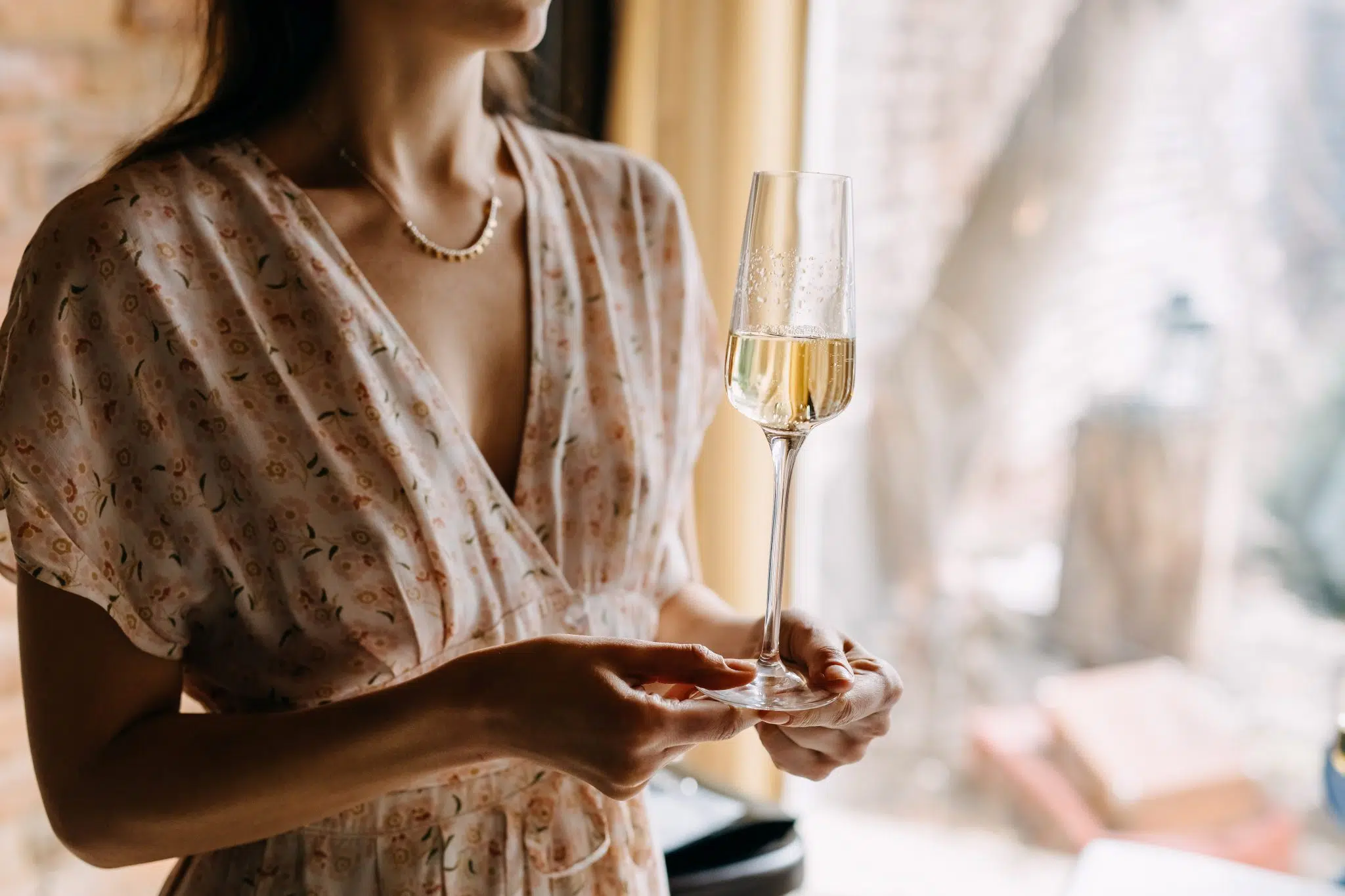
Holding a Champagne glass by the base adds flair and avoids warming or smudging the glass. To do this, pinch the base between your thumb and fingers, with your thumb on top and fingers underneath.
This method keeps the Champagne cold and the glass clean while offering a stylish presentation. The downside is that setting the glass down without using your other hand can be difficult. It is also unsuitable for coupe glasses, as their wide bowl makes balancing more challenging.
3. Hold by the Rim
Holding a Champagne glass by the rim is possible but not ideal. While it avoids warming the drink if the glass is only three-quarters full, it often smudges the glass and makes sipping awkward. This method works better with flutes or tulips but is unsuitable for coupe glasses, as their wide opening makes them harder to grip and more prone to spills.
4. Hold by the Bowl

Avoid holding a Champagne glass by the bowl if possible. This method warms the Champagne, causing bubbles to fade quickly and intensifying alcohol aromas, which can overpower the drink’s delicate notes. However, if you use a coupe glass, you may need to hold it partially by the bowl to prevent spills. Minimize contact with the bowl to reduce warming.
Why Holding a Champagne Glass Properly Matters
It might seem like a small detail, but how you hold your Champagne glass impacts your overall experience:
- Preserve the Chill: Champagne stays cold when you hold the stem, as it keeps your hand away from the bowl.
- Protect the Bubbles: Warm hands speed up the loss of carbonation. Holding the stem helps maintain the Champagne’s effervescence.
- Avoid Spills: Champagne glasses, especially flutes and coupes, are top-heavy. Holding the stem improves balance and reduces the risk of spills.
- Stay Stylish: Let’s face it—holding the stem just looks chic. It’s the effortless touch that completes the Champagne-drinking experience.
Adapting to Different Champagne Glasses
Champagne is typically served in three types of glasses, each with its unique handling nuances:
- The Flute
- This tall, narrow glass is a classic for preserving bubbles. Hold it firmly by the stem to keep things stable and elegant.
- The Coupe (or Champagne Saucer)
- The coupe glass has a short stem and a wide, shallow bowl. While charmingly vintage, it’s prone to spills. Balance your hold between the stem and bowl for added stability.
- The Tulip
- The tulip combines the best features of the flute and coupe, with a wider bowl to enhance aromas and a tapered top to preserve fizz. Like the flute, hold it firmly by the stem for the best experience.

Champagne Etiquette in Social Settings
Holding your Champagne glass properly isn’t just about enjoying the drink; it’s also about social grace. Here are a few tips to make the most of your sparkling wine moments:
- During Toasts: Raise your glass by the stem and hold it slightly above eye level. This not only keeps things balanced but adds a touch of sophistication to the moment.
- While Mingling: Keep your grip light and secure by the stem. This lets you move around comfortably without worrying about spills.
- Taking a Sip: Tilt the glass gently towards your lips, maintaining your hold on the stem. Sip slowly to enjoy the full spectrum of flavors.
- When serving: Remember to only fill champagne glasses up to ¾ at the maximum – filling them too much can be seen as poor etiquette rather than a generous move on your part! The wine indeed needs a bit of empty space at the top of the glass for the bubbles and flavor to fully develop; plus, it allows the drinker to enjoy its scent as well without the risk of dipping their nose in the champagne.