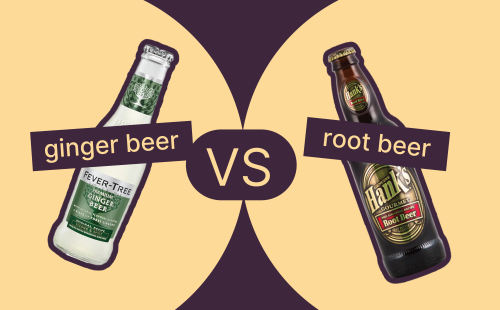

Ginger and root beer might sit side by side on the soda aisle, but they couldn’t be more different.
Ginger beer has a bold, spicy flavor and is very popular in cocktails like the Moscow Mule. Root beer, on the other hand, has a creamy and sweet taste and is more of a classic soda, often enjoyed in floats.
While ginger beer benefits from its use in cocktails, root beer struggles with lower consumer awareness despite its long history.
Here’s how they compare:
Key Differences Between Ginger Beer and Root Beer
- Flavor: Ginger beer has a spicy, gingery flavor with a citrusy note, while root beer is sweet and smooth with flavors from sassafras, licorice, and vanilla.
- Ingredients: Ginger beer is traditionally made from fermented ginger, sugar, and water, though modern versions often use ginger flavoring. Root beer combines sugar, water, and extracts from roots (especially sassafras tree roots), barks, and herbs. Traditionally, it was also fermented (hence the name of “beer”), but most commercially available root beers today don’t undergo any fermentation and use flavorings to recreate their distinctive taste.
- Alcohol Content: Both ginger beer and root beer historically contained low alcohol due to fermentation (generally around 2% ABV / 4 proof) but are now mostly non-alcoholic.
- Appearance: Ginger beer is cloudy and may have a yellowish tinge, while root beer is dark brown and clear, with an appearance close to the one of Cola.
- Taste Profile: Ginger beer is crisp, refreshing, and has a “bite” from the ginger. Root beer is creamy, smooth, sweet and often has a herbal or medicinal quality.
Most commercial ginger beers and root beers contain between 100-150 calories per 12-ounce serving.
What is Root Beer?
Root Beer is a sweet, carbonated soft drink traditionally made using a combination of root extracts, barks, and herbs.
Root beer originated in North America and traces back to indigenous herbal remedies and colonial “small beers,” which were low-alcohol drinks made from roots, bark, and herbs. It was traditionally brewed with sassafras root as the key ingredient, alongside a blend of other plants such as sarsaparilla, hoja santa and licorice.
Commercial production began in the mid-19th century in the United States, when pharmacist Charles Elmer Hires popularized root beer by introducing a commercial version at the Philadelphia Centennial Exposition in 1876. Modern root beer retains its distinctive spiced flavor. However, artificial flavors have largely replaced sassafras due to health concerns (sassafras contains safrole, which was banned for human consumption by the FDA in the 1960s after several studies suggested that safrole was carcinogenic and could cause irreversible liver damage).

Production
Modern root beer is typically made by combining sugar, water, and a blend of flavorings, including artificial sassafras flavoring due to safrole-related health concerns. It is then carbonated to create its fizzy texture. Some small producers and home brewers continue traditional methods using roots and herbs, sometimes resulting in slightly alcoholic versions.
Variations
- Traditional Root Beer mimics the original sassafras flavor profile using artificial flavorings or safrole-free sassafras extracts.
- Sarsaparilla is a related drink with a stronger sarsaparilla root flavor.
- Craft Root Beer is made with natural ingredients and traditional brewing methods for a unique taste. It can contain a little bit of alcohol (although generally negligible) as it has to go through a fermentation process.
- Hard Root Beer is an alcoholic version that has gained popularity in recent years.
- Diet Root Beer uses artificial sweeteners to reduce or eliminate sugar content.
And now, what is Ginger Beer?
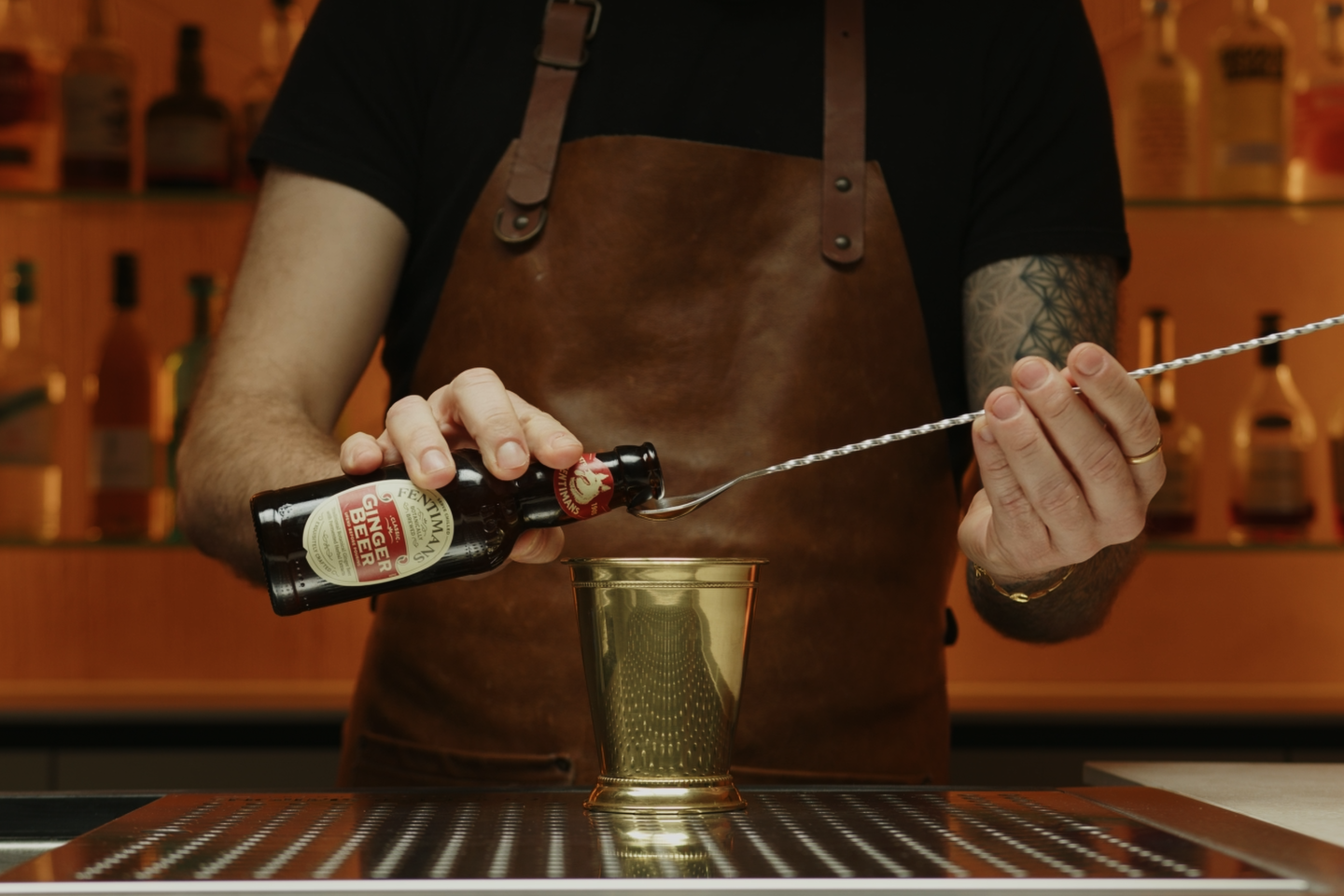
Ginger beer is a sweet, spicy, carbonated beverage traditionally made by fermenting ginger, sugar, and water.
Though its name suggests an alcoholic drink, most modern ginger beers are non-alcoholic as they are generally no longer made using a fermentation process. Alcoholic versions, also called hard ginger beer, are available and gaining popularity. Ginger beer is distinct from ginger ale, which is milder, sweeter, and less intensely flavored.
Learn More: Ginger Beer vs Ginger Ale
Production
- The Traditional Method ferments ginger, sugar, and water with a starter culture (called a “ginger bug”) to produce natural carbonation and a low alcohol content.
- The Modern Method uses carbonated water, sugar, and ginger extract or flavorings for a non-alcoholic beverage with consistent flavor.
Variations
- Non-Alcoholic Ginger Beer is the most commercially available ginger beer, made without fermentation.
- Alcoholic or Hard Ginger Beer is fermented and typically under 5% alcohol.
- Dark Ginger Beer includes molasses or darkening agents for a richer flavor.
- Light Ginger Beer is a less intensely flavored and clearer version.
Related: Ginger Beer Cocktails & Ginger Ale Cocktails
Can They Be Substituted for Each Other?
Ginger Beer and Root Beer can not be used interchangeably. Ginger beer’s bold spice does not align with the creamy, sweet flavor of root beer. Substitution would significantly change the drink’s taste.
If you can’t handle ginger beer’s spiciness or simply would like a milder, maybe more kid-friendly alternative, try using ginger ale as a substitute. If you’re looking for a substitute for root beer, we recommend you try alternatives such as sarsaparilla or birch beer, which both have the same sweet, slightly botanical flavor profile.
FAQs
Are ginger beer and root beer healthy?
Ginger beer may offer some digestive benefits due to its ginger content, but it is often high in sugar. While sweet and nostalgic, root beer typically lacks any health benefits and is also high in sugar. Diet versions of both drinks reduce sugar content but contain artificial sweeteners.
Can kids drink ginger beer and root beer?
Yes, most commercially available ginger beers and root beers are non-alcoholic, caffeine-free and safe for kids to drink. Always check the label to ensure they are alcohol-free. Also be careful, ginger beer may be too spicy for the younger ones!
What are the best-known brands of ginger beer and root beer?
Popular ginger beer brands include Fever-Tree, Bundaberg, Goslings and Old Jamaica. Well-known root beer brands include A&W, Barq’s, and Mug.