Whiskey tastings can feel intimidating when you don’t have the know-how, terminology or techniques for doing so. But armed with just a bit of knowledge, you too can become an expert taster!
In this guide and video, Ludo Ducrocq—Whisk(e)y Consultant and expert with over 25 years in the industry—leads us through the step by step of tastings. Ludo’s contributions over his career to the field of scotch whisky earned him the title of ‘Keeper of the Quaich’ in 2012, so his guidance is invaluable.
Read on to master the art of whiskey tasting, and enjoy the video guide. Cheers!
*A small note: You’ll notice we have Whisk(e)y with the ‘e’ as optional. Why would this be, you ask? It comes down to geography. A general rule of thumb is that “Whiskey” (with an ‘e’) is typically used in Ireland and the United States, while Whisky” (without an ‘e’) is used in Scotland, Canada, Japan, and most other whisky-producing countries. The more you know!
1) Gather the Right Tools

Before diving into whiskey tasting, ensure you have the proper equipment:
- A nosing glass: A tulip-shaped glass, wider at the base and narrower at the top, concentrates aromas and enhances your ability to detect different scents.
- Multiple whiskeys: One you are familiar with for a baseline, and as few as 2 or up to 5 whiskeys to compare and identify subtle differences in aroma and taste.
- Palate cleansers: Plain bread, crackers, or water help reset your taste buds between samples. Some prefer the option of coffee beans.
- A Pipette and tasteless water: Mineral water with minimal minerals is best for diluting whiskey without altering its natural flavors. As crisp and clear a favor as you can get!
- Optional: A Flavor Wheel or Spider Graph: These tools help you categorize and visualize different whiskey aromas.
2) Observing the Whiskey

Start by visually inspecting your whiskey:
- Color: While whiskey color can hint at the type of cask used for maturation, be aware that some whiskeys contain tasteless coloring.
- Rolling the glass: Tilt the whiskey at a 45-degree angle and roll it inside the glass. Observe how beads (or “legs”) form—slower, thicker beads often indicate a higher alcohol content.
3) Nosing the Whiskey

Aroma is key in whiskey tasting. Follow these steps to nose whiskey properly:
- Hold the glass near your nose and take a gentle sniff.
- Some prefer starting with one nostril, then alternating.
- Keeping your mouth slightly open can help aromas move more freely between your nose and mouth.
- Close your eyes and focus on the scents—let memories and associations help you identify familiar aromas.
- If needed, use a flavor wheel to classify aromas into categories like fruity, smoky, or spicy.
4) Tasting the Whiskey

Now comes the most exciting part—tasting!
- Taste neat first: Sip the whiskey without adding anything to experience its full strength.
- Add water: A drop of water can help release hidden aromas and soften the ethanol burn. If going full pro, dilute it to a tasting strength of about 25-30% alcohol by volume.
- Shake and smell again: Cover the glass with your hand, shake it gently, and take another sniff to detect any changes in aroma.
- Identify Flavors: Take a slow sip, letting the whiskey coat your tongue. Pay attention to sweetness, spice, smokiness, or fruitiness.
Trust Your Instincts!
There’s no one-size-fits-all approach to whiskey tasting. Experiment with different techniques and trust your senses. Whiskey tasting is, after all, instinctive. Let the aromas and flavors transport you to past memories, and most importantly, enjoy the process!
Cheers to discovering your perfect whiskey!
FAQs:
Should I do ice or no ice?
Adding ice is a personal choice. Ice chills the whiskey, which can suppress some aromas but also provide a refreshing experience. If you want to fully explore flavors, it’s best to drink whiskey neat or with a few drops of water.
Should I swirl Whiskey like Wine?
Not necessarily. Unlike Wine, swirling Whiskey can release too much ethanol at once, overpowering delicate aromas. Instead, gently tilt and roll the glass.
What are some terms I can use to describe the Whiskies I’m smelling?
- Fruity – Apple, pear, citrus, dried fruits, tropical notes
- Floral – Lavender, rose, heather, chamomile
- Spicy – Cinnamon, nutmeg, black pepper, cloves, anise
- Sweet – Vanilla, honey, caramel, toffee, butterscotch
- Smoky – Peat smoke, campfire, burnt wood, charred oak
- Woody – Fresh oak, cedar, toasted almonds, walnuts
- Earthy – Leather, damp wood, mushrooms, tobacco
What are some terms I can use to describe the Whiskies I’m tasting?
- Sweet flavors — Vanilla, caramel, toffee, honey, chocolate
- Fruity Notes — citrus (lemon, orange, grapefruit), dried fruit (raisins, figs, dates), and dark fruit
- Spicy & Herbal Notes — Cinnamon, nutmeg, clove, black pepper, anise & licorice
- Peaty & Smoky Notes — Peaty (a medicinal, earthy, or smoky flavor, common in Islay Scotch), campfire smoke, tobacco & leather
- Woody & Nutty Notes — oak, almonds, coconut
- Earthy & savory notes — maltiness, saltiness, briny, umami, meaty
Where should I travel to in order to experience some of the best whiskey tastings and distilleries?
Four key areas will bring a rich array of whiskey tasting experiences to your palate:
- Scotland is, one could argue, the epicenter of whiskey tourism, particularly the Speyside region with its high concentration of distilleries like Macallan, Glenfiddich, and Balvenie. The island of Islay offers distinctive peaty whiskies at distilleries like Laphroaig and Ardbeg.
- Kentucky’s Bourbon Trail provides an immersive American whiskey experience with iconic distilleries such as Maker’s Mark, Woodford Reserve, and Buffalo Trace offering comprehensive tours and tastings.
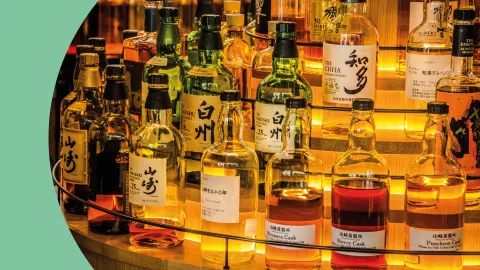
- Japan has emerged as a world-class whisky destination where you can visit Suntory’s Yamazaki, Japan’s oldest distillery, or Nikka’s picturesque Yoichi distillery on Hokkaido.
- And lastly, Ireland offers both historic and innovative whiskey experiences at places like Jameson’s Midleton distillery, Bushmills (the world’s oldest licensed distillery), and newer craft operations in Dublin.